



| Size chart | Nominal size (in.) | Working load limit (t) | Dimensions of each part (mm) | ||||||||
| A | B | C | D | E | F | G | H | P | |||
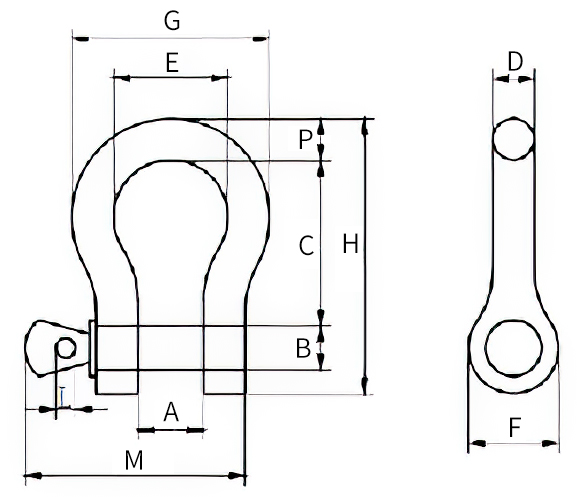 | 3/16 | 0.33 | 9.65 | 6.35 | 22.4 | 4.83 | 15.24 | 14.2 | 24.9 | 37.3 | 4.83 |
| 1/4 | 0.5 | 11.9 | 7.87 | 28.7 | 6.35 | 19.81 | 15.5 | 32.5 | 46.7 | 6.35 | |
| 5/16 | 0.75 | 13.5 | 9.65 | 31.0 | 7.87 | 21.34 | 19.1 | 37.3 | 53.1 | 7.87 | |
| 3/8 | 1 | 16.8 | 11.2 | 36.6 | 9.65 | 26.2 | 23.1 | 45.2 | 63.2 | 9.65 | |
| 7/16 | 1.5 | 19.1 | 12.7 | 42.9 | 11.2 | 29.5 | 26.9 | 51.6 | 73.9 | 11.2 | |
| 1/2 | 2 | 20.6 | 16.0 | 47.8 | 12.7 | 33.3 | 30.2 | 58.7 | 83.3 | 12.7 | |
| 5/8 | 3.25 | 26.9 | 19.1 | 60.5 | 16.0 | 42.9 | 38.1 | 74.7 | 106 | 17.5 | |
| 3/4 | 4.75 | 31.8 | 22.4 | 71.4 | 19.1 | 50.8 | 46.0 | 88.9 | 126 | 20.6 | |
| 7/8 | 6.5 | 36.6 | 25.4 | 84.1 | 22.4 | 57.9 | 53.1 | 102 | 148 | 24.6 | |
| 1 | 8.5 | 42.9 | 29.2 | 95.3 | 25.4 | 68.3 | 60.5 | 119 | 167 | 26.9 | |
| 1-1/8 | 9.5 | 46.0 | 31.8 | 108.0 | 29.5 | 73.9 | 68.3 | 131 | 190 | 31.8 | |
| 1-1/4 | 12 | 51.6 | 35.1 | 119.1 | 32.8 | 82.6 | 76.2 | 146 | 210 | 35.1 | |
| 1-3/8 | 13.5 | 57.2 | 38.1 | 133.4 | 36.1 | 92.2 | 84.1 | 162 | 233 | 38.1 | |
| 1-1/2 | 17 | 60.5 | 41.4 | 146.1 | 39.1 | 98.6 | 92.2 | 175 | 254 | 41.1 | |
| 1-3/4 | 25 | 73.2 | 50.8 | 177.8 | 46.7 | 127 | 106 | 225 | 313 | 57.2 | |
| 2 | 35 | 82.6 | 57.2 | 196.9 | 52.8 | 146 | 122 | 253 | 347 | 61.0 | |
| 2-1/2 | 55 | 105 | 69.9 | 266.7 | 68.8 | 184 | 145 | 327 | 453 | 79.5 | |
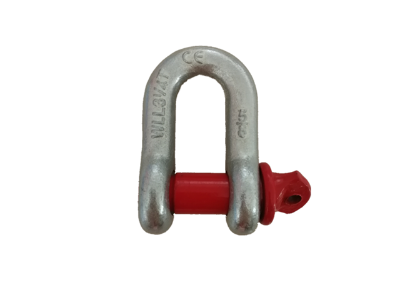
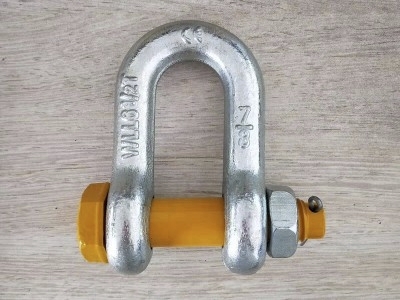
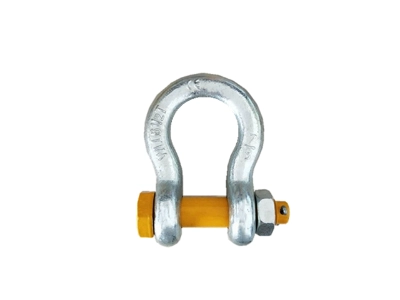
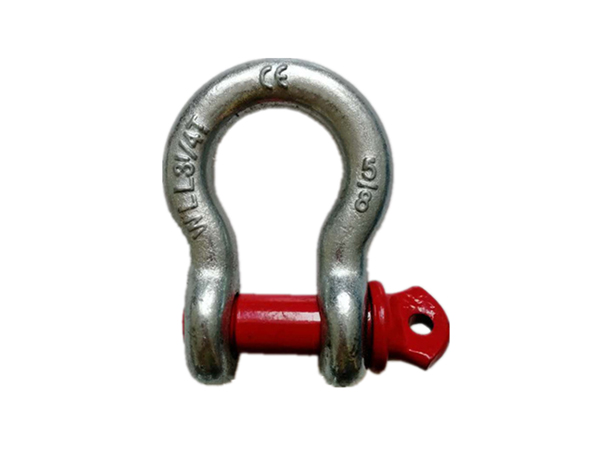
Shackle series description
Instructions for Use
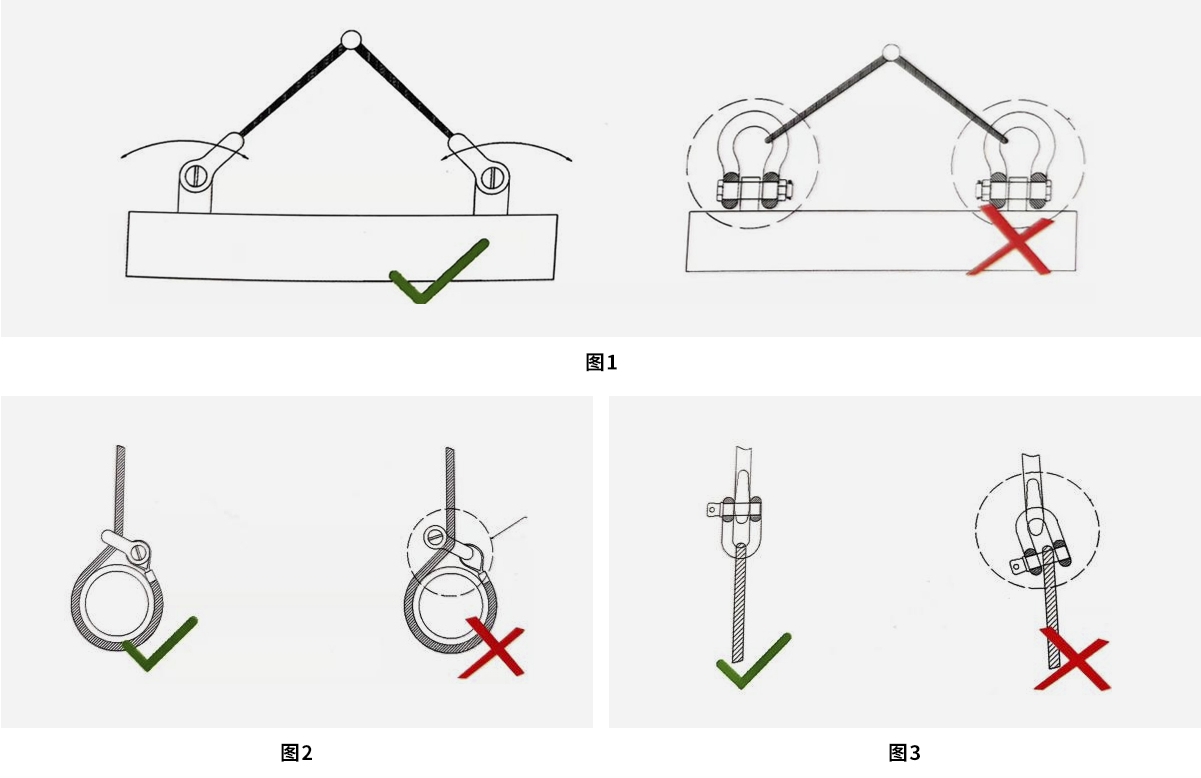
1. When using the lifting ring, the maximum allowable angle is 120°, as shown in Figure 1 below
2. It is prohibited to use bolts or metal rods as substitutes for pin shafts.
3. The shackle body should not bear the effect of lateral bending moment, meaning that the bearing capacity should be within the plane of the shackle body. See Figure 3
4. Please use it correctly and overload is strictly prohibited.
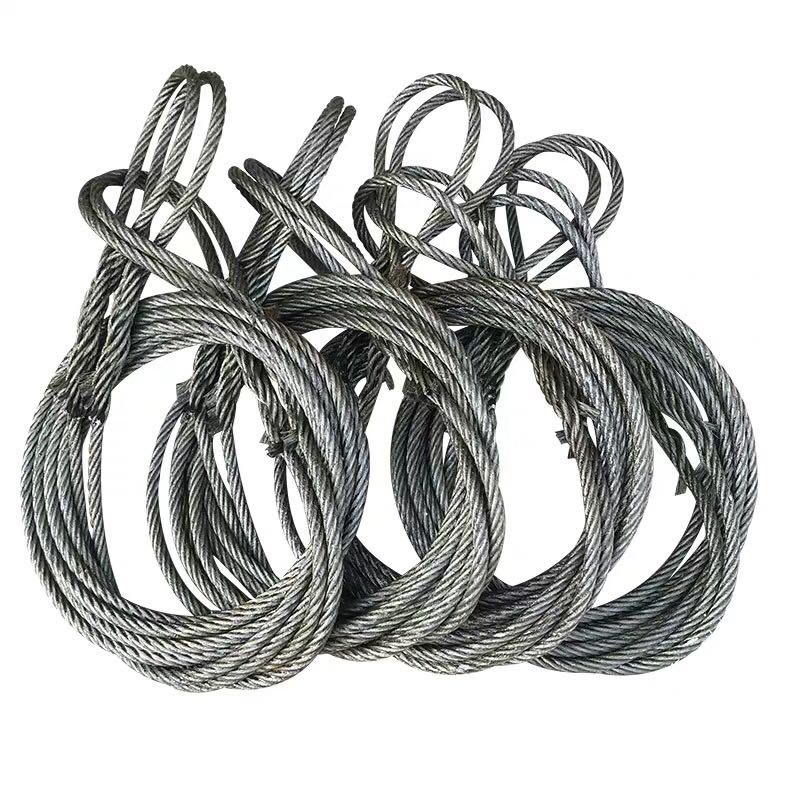
5. When shackles are used as binding rigging in conjunction with steel wire rope slings, the binding method should be as shown in Figure 2.
Scrapping standard
1. When the rust or wear on shackles and pins exceeds 10% of the nominal size, they should be scrapped.
2. If any visible cracks or flaws are found on any part of the shackle, or if defects are detected during flaw detection inspection, it should be scrapped.
3. If the shackle shows obvious deformation and the pin shaft cannot rotate, it should be scrapped.
Product Display
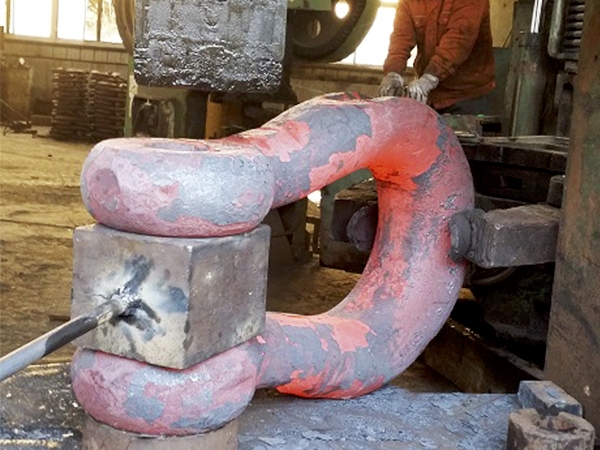
processing

semi-finished product

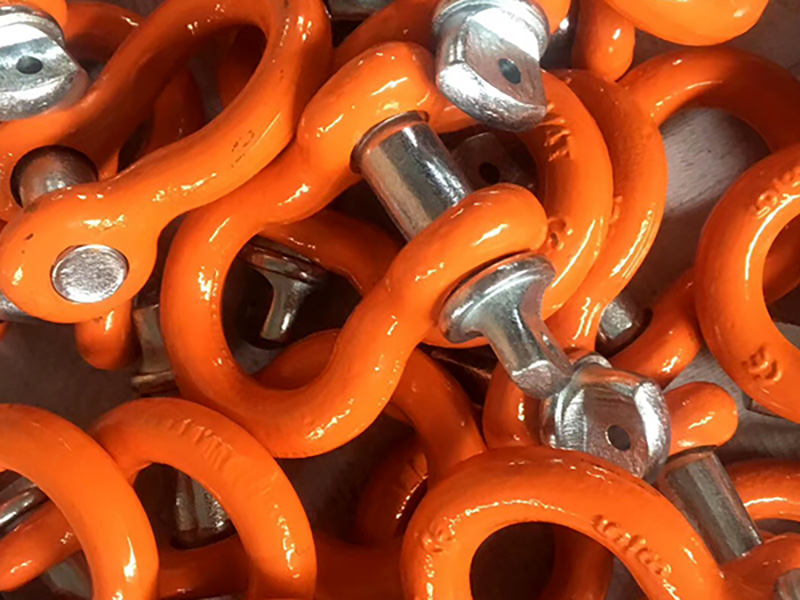
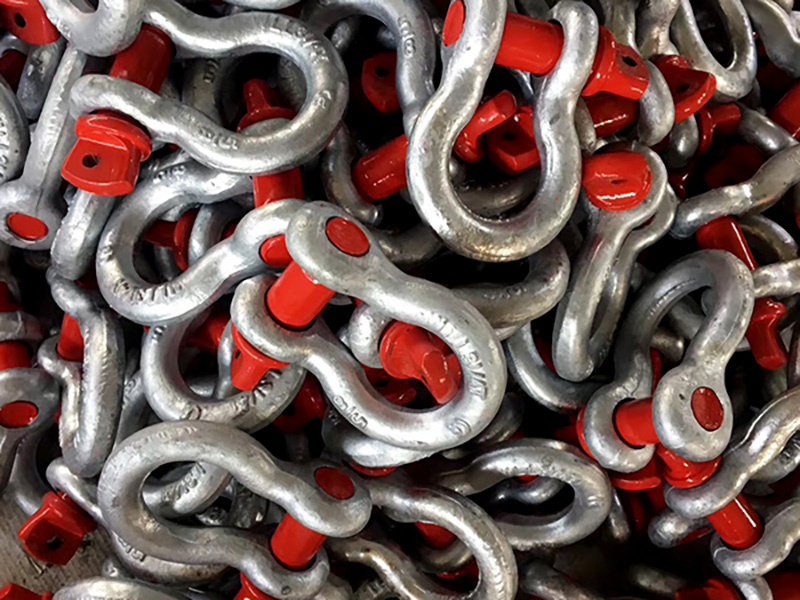
Finished Product Display

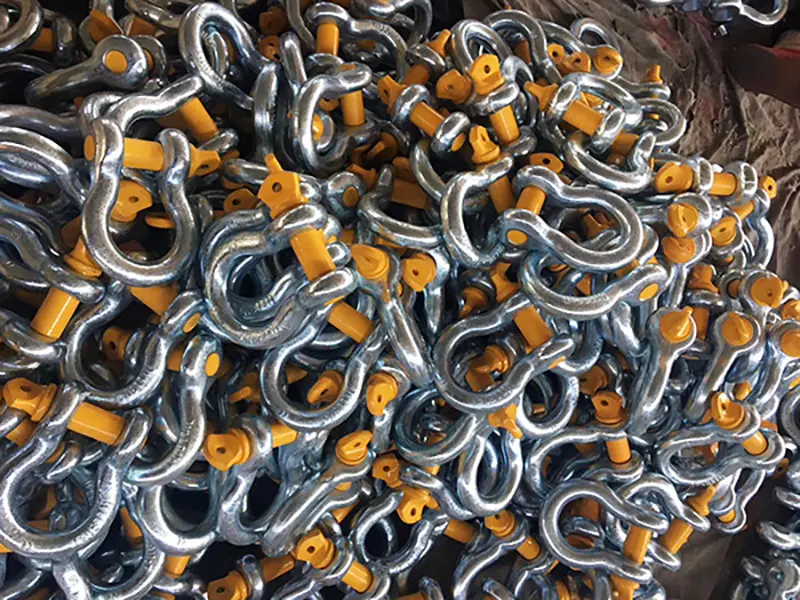
product packaging