

Abstract
For procurement engineers and rigging supervisors, choosing a Spliced Steel Wire Rope Sling or a ferrule-secured sling directly affects working load limit (WLL), inspection requirements, and long-term operating costs. Both termination methods offer distinct advantages in load transfer, fatigue resistance, field maintenance, and manufacturing consistency, making the right choice dependent on lifting conditions and project requirements.
This article compares spliced and ferrule-secured wire rope slings across four key areas: construction methods and termination efficiency, static and dynamic load performance, inspection and compliance requirements under ASME B30.9 and relevant EN and ISO standards, and total cost of ownership (TCO). Whether you source slings for offshore lifting, steel mills, or construction projects, this guide helps you evaluate performance, safety, and lifecycle costs to make informed procurement decisions.
1. Understanding the Two Termination Technologies
1.1 How Hand-Spliced Eyes Are Constructed
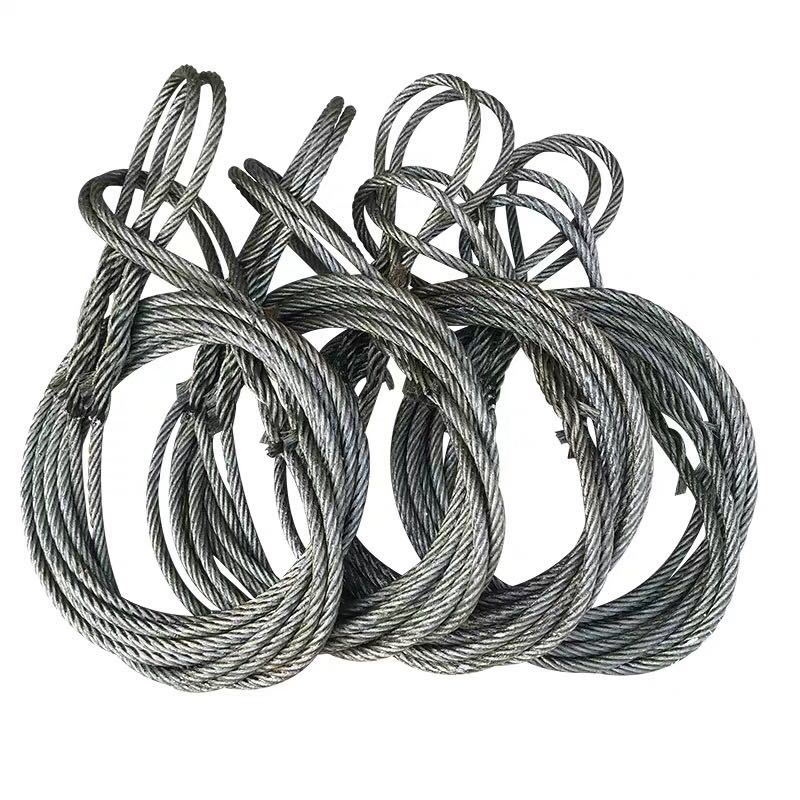
A hand splice—most commonly the Tucker splice or Liverpool splice—is formed by unlaying the rope’s strands and systematically weaving (tucking) them back through the rope body against the lay. Industry-standard specifications typically require a minimum of three full tucks plus two tapered tucks to achieve a secure termination. Each tuck progressively distributes the load across a longer grip length, reducing stress concentration at the eye throat.
The mechanical efficiency of a correctly executed hand splice is accepted at approximately 95% of the rope’s catalog breaking strength under ASME B30.9 and equivalent standards. This 5% deduction is factored into WLL calculations. Critically, splice quality is operator-dependent: tuck uniformity, correct strand seating, and proper thimble fitment all influence the realized efficiency. Slings must be made by trained riggers, and the process is not readily scalable for high-volume production environments.
1.2 How Ferrule-Secured (Swaged) Eyes Are Constructed
Ferrule-secured terminations use a cold-swaging process in which a precision-machined metal sleeve (ferrule) is hydraulically compressed around the rope’s folded tail to form a permanent mechanical bond. The ferrule material is typically carbon steel or stainless steel, selected based on corrosion exposure and rope grade. Swaging pressure is calibrated to the rope diameter and ferrule specification, and the process is performed on controlled hydraulic presses—eliminating operator variability.
The efficiency rating of a properly swaged ferrule termination reaches 100% of the rope’s minimum breaking force (MBF), meaning the rope body will fail before the termination under static overload. This preserves the full rated capacity of the rope without any deduction, directly maximizing WLL at equivalent rope diameters.
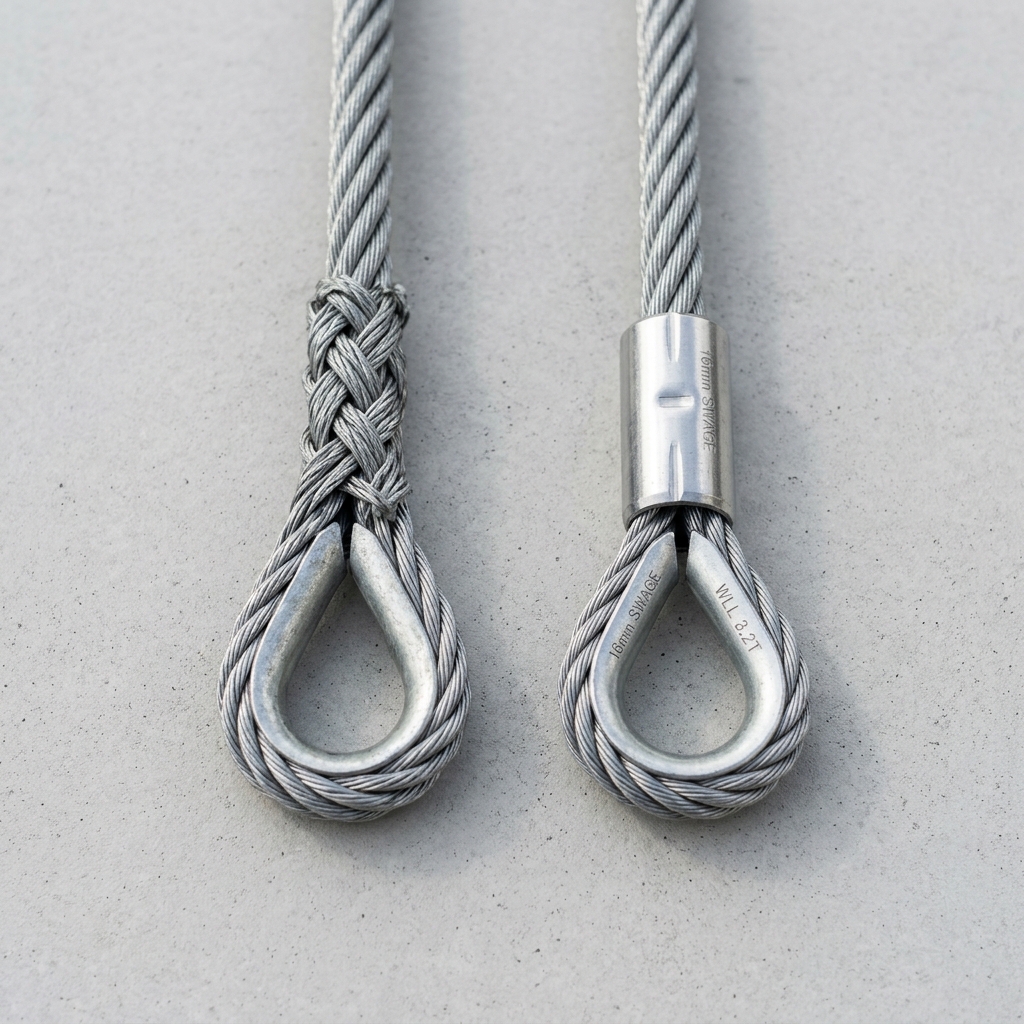
Table 1: Construction Parameter Comparison
| Parameter | Hand-Spliced Eye | Ferrule-Secured (Swaged) Eye |
|---|---|---|
| Manufacturing Method | Manual strand tucking | Hydraulic cold-swaging |
| Efficiency Rating (%) | ~95% of MBF | ~100% of MBF |
| Applicable Rope Diameter | 6 mm – 52 mm (typical) | 6 mm – 64 mm (typical) |
| Production Consistency | Operator-dependent | Machine-controlled |
| Typical Lead Time | 1–3 days (craft-dependent) | 1–2 days (tooling-dependent) |
| Re-termination in Field | Possible (requires qualified rigger) | Not possible; replace sling |
2. Strength Retention & Mechanical Performance
2.1 Static Load Capacity and Safety Factor Comparison
Under both ASME B30.9 and EN 13414-1, the design factor for wire rope slings is 5:1 (WLL = MBF ÷ 5). Termination efficiency directly multiplies into this calculation. For a 20 mm diameter sling rope with a catalog MBF of 200 kN:
- Ferrule-secured: WLL = (200 kN × 1.00) ÷ 5 = 40.0 kN
- Hand-spliced: WLL = (200 kN × 0.95) ÷ 5 = 38.0 kN
This 2 kN differential may appear marginal, but in multi-leg configurations or high-cycle applications, the aggregate effect on rated assembly capacity is commercially significant. Procurement teams specifying basket or bridle slings should account for this reduction across all legs.
Additionally, thimble fitment in spliced eyes is mandatory under most standards when the sling operates in choker or basket configuration. A missing or deformed thimble at the splice throat reduces effective eye radius and accelerates rope fatigue at the contact point—a failure mode not present in ferrule-swaged terminations, which integrate the eye geometry into the swaging die profile.
2.2 Fatigue, Shock Load, and Cyclic Loading Behavior
Under dynamic and shock loading, the two termination types diverge significantly. Hand splices distribute load through friction between interlocked strands. Under repeated shock loading—common in crane picks with sudden load arrest—the tuck interface can experience micro-slip, progressively loosening the grip and reducing effective efficiency below the nominal 95% rating.
Ferrule-secured terminations, by contrast, transfer load through mechanical deformation of the ferrule into the rope interstices, creating a bond that is largely insensitive to shock load cycling. Field failure data from offshore and port operations consistently shows that ferrule failures occur in the rope body (wire fatigue or corrosion) rather than at the termination, confirming that the swaged joint is not the limiting element.
For applications involving frequent lifts, dynamic crane operations, or shock-load exposure (e.g., pile driving, marine salvage), ferrule terminations offer materially superior fatigue life at the critical load transfer zone.
3. Inspection Protocols and Compliance Standards
3.1 Applicable Standards: ASME B30.9, EN 13411, and ISO 8792
Three primary standards govern wire rope sling termination requirements for B2B buyers:
- ASME B30.9 (USA): Requires hand splices to meet specific tuck-count minimums and mandates thimbles in all eye terminations. Ferrule-secured slings must be proof-tested and marked with WLL, sling ID, and manufacturer data.
- EN 13411-3 (Europe): Covers ferrule-secured eyes specifically, requiring dimensional tolerances on ferrule compression, proof load testing at 2× WLL, and CE marking with a Declaration of Conformity.
- ISO 8792: Provides international baseline requirements for wire rope sling identification, marking, and termination efficiency factors—directly referenced in procurement specifications for multinational projects.
For procurement documentation, ferrule-secured slings typically arrive with a manufacturer’s certificate of conformity, proof load certificate, and traceability to the rope coil. Hand-spliced slings require documentation of the rigger’s qualification in addition to the sling certificate—adding a compliance verification step that procurement teams must manage.
3.2 Field Inspection Criteria and Rejection Triggers
Periodic inspection intervals under ASME B30.9 are defined by frequency of use: initial inspection before first use, frequent inspections (each shift or daily for critical lifts), and periodic inspections (monthly to annually based on service severity).
Rejection triggers for hand-spliced slings:
- Any displaced, pulled-through, or unraveling tuck
- Thimble distortion, cracking, or displacement from the eye
- Broken wires within one rope lay length exceeding standard limits (typically 10 random wires in one lay)
- Kinking, bird-caging, or core protrusion near the splice throat
Rejection triggers for ferrule-secured slings:
- Ferrule cracking, splitting, or visible slippage (rope tail movement within ferrule)
- Corrosion pitting penetrating ferrule wall thickness
- Rope wire breaks within 6× rope diameter of the ferrule end
- Deformation of the ferrule body exceeding dimensional tolerances
Ferrule slings offer a distinct inspection advantage: the pass/fail criteria are visually unambiguous. Splice inspection requires a more experienced eye to detect subtle tuck displacement or strand seating irregularities, increasing the risk of field misassessment.
4. Application Scenarios and Commercial Considerations
4.1 Matching Termination Type to Industry and Operating Environment
Offshore and marine environments demand ferrule-secured terminations. Salt spray, hydrogen embrittlement, and continuous dynamic loading create conditions where splice integrity degrades unpredictably. Stainless steel or hot-dip galvanized ferrules with compatible rope grades are the industry standard for subsea and dock-side lifting.
Steel mill and heavy industrial applications involving high temperatures require careful material selection for both rope and ferrule. Above 150°C, standard ferrule alloys can lose compressive grip; specialized high-temperature ferrule materials or alternative terminations must be specified. Hand splices offer no advantage here, as elevated temperatures equally compromise strand-to-strand friction.
General construction and civil engineering represents the primary domain where hand-spliced slings remain commercially viable. Lower cycle counts, controlled environments, and access to qualified riggers for re-termination make spliced slings a cost-effective choice for non-critical or low-frequency lifts.
Sling configuration also influences the decision: choker hitches impose bending loads at the eye throat that accelerate splice wear; ferrule-swaged eyes with integrated thimbles are better suited to repetitive choker applications.
4.2 Total Cost of Ownership: Unit Price vs. Service Life vs. Re-certification Cost
| TCO Factor | Hand-Spliced Eye | Ferrule-Secured Eye |
|---|---|---|
| Unit Purchase Price | Lower (labor-intensive, craft-based) | Moderate (tooling amortized at volume) |
| WLL per Rope Diameter | 5% lower effective capacity | Full rated capacity |
| Inspection Labor | Higher (requires experienced inspector) | Lower (clear visual criteria) |
| Re-termination Feasibility | Yes (qualified rigger required) | No (full sling replacement) |
| Downtime Risk on Failure | Moderate | Low (earlier visual detection) |
| Certification Documentation | Rigger qualification + sling cert | Manufacturer cert + proof test |
Over a 3-year operational cycle in high-frequency lifting environments, ferrule-secured slings consistently demonstrate lower TCO despite a higher unit price, driven by reduced inspection labor, fewer compliance incidents, and longer service intervals before discard criteria are reached.
FAQ
Q1: Does a hand-spliced wire rope sling meet the same WLL as a ferrule-secured sling of the same rope diameter?
No. Due to the 95% efficiency rating applied to hand-spliced terminations versus 100% for ferrule-secured eyes, a spliced sling will carry a marginally lower WLL for identical rope diameter and grade. In critical or multi-leg lifts, this difference should be explicitly accounted for in lift plan calculations.
Q2: How often must spliced steel wire rope slings be formally inspected under ASME B30.9 or EN 13411?
ASME B30.9 requires a documented periodic inspection at intervals not exceeding one year for normal service, with more frequent inspections for severe or special service conditions. EN 13411 defers inspection frequency to the competent person’s risk assessment, but industry practice aligns with quarterly formal inspections for high-cycle applications.
Q3: Can a damaged hand splice be re-tucked in the field, and does this require re-certification?
A splice showing tuck displacement or partial failure must be removed from service immediately. Re-splicing by a qualified rigger is technically feasible, but the sling must be re-inspected, proof-tested if required by the applicable standard, and re-certified before returning to service. Field re-splicing without re-certification constitutes a compliance violation under ASME B30.9 and EN 13414.
Conclusion
The ferrule-secured (swaged) steel wire rope sling is the technically superior termination for the majority of B2B industrial lifting applications: it delivers 100% rope efficiency, machine-controlled consistency, unambiguous inspection criteria, and lower long-term TCO in high-cycle or regulated environments. Hand-spliced eyes retain commercial relevance in lower-frequency, field-flexible applications where re-termination capability and lower unit cost outweigh the efficiency and inspection advantages of swaging.
Specify ferrule-secured slings when: maximum WLL per rope diameter is required, operating environments involve corrosion or dynamic loading, or regulatory documentation burden must be minimized.
Specify hand-spliced slings when: field re-termination capability is operationally necessary, cycle counts are low, and qualified riggers are consistently available for inspection and re-certification.
For procurement teams, the most defensible strategy is to standardize on ferrule-secured terminations for primary and critical lifts, reserving spliced slings for auxiliary and low-frequency applications—balancing compliance risk, inspection cost, and capital expenditure across the full lifting equipment inventory.