

Introduction
Selecting the right rigging components is critical for maintaining safety and efficiency on offshore platforms, shipyards, and heavy construction sites. While wire rope slings are essential for hoisting massive loads and securing cargo, their performance and reliability depend entirely on the termination method used to form the eye loop.
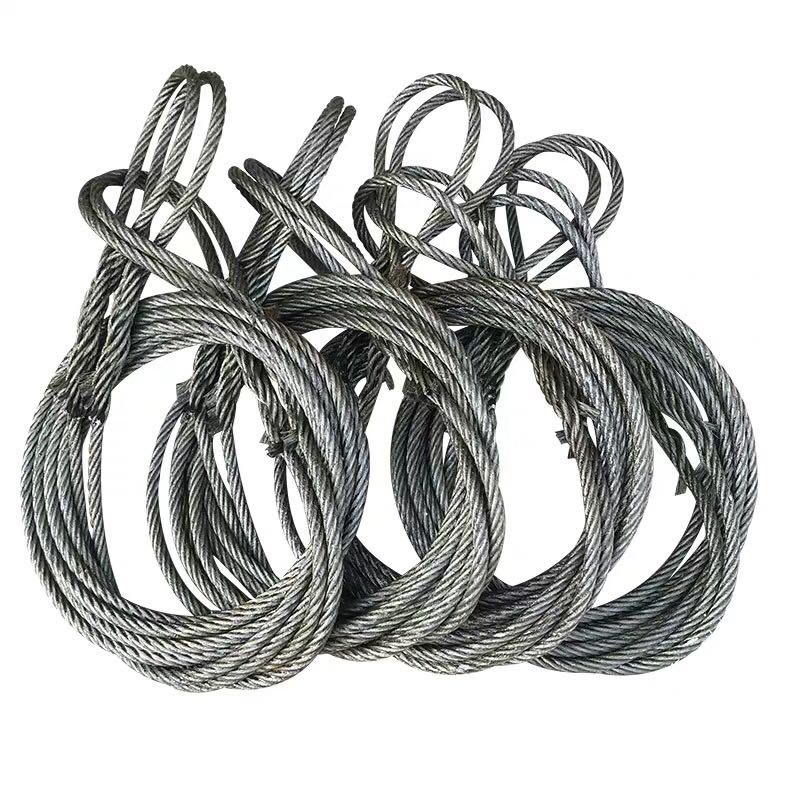
Although many manufacturers rely on pressing a soft aluminium sleeve over the wire rope, a spliced steel wire rope sling uses an interlocking weave integrated directly back into the rope body. For critical, high-stakes lifts, this spliced termination delivers superior fatigue resistance, longer service life, and a visible failure mode that gives rigging supervisors a clear safety advantage.
Spliced Steel Wire Rope Sling vs. Pressed Sleeve?
The distinction comes down to how the eye termination is formed. A pressed aluminium sleeve sling works by looping the rope back and crushing a soft metal sleeve—usually aluminium—over both parts using a hydraulic press. The sleeve holds everything in place, meaning the integrity of that single pressed sleeve determines the entire strength of the sling. If the sleeve fails, the entire connection compromises instantly without any internal redundancy.
A spliced steel wire rope sling takes a fundamentally different approach. Instead of relying on an external sleeve, the strands of the rope are untwisted, looped back, and woven into the rope body in a precise interlocking pattern. This splice creates an integrated weave that becomes part of the rope itself, eliminating a single point of failure.
The load distributes uniformly across multiple strands, meaning the termination depends on the mechanical interlocking of steel wires rather than a frictional crimp. When you choose a spliced steel wire rope sling, you secure a connection that degrades gradually and provides visible wear patterns.
Where Do Pressed Sleeves Fall Short?
Pressed aluminium sleeves have been standard in the industry for decades due to being highly cost-effective and quick to manufacture. However, they carry inherent physical vulnerabilities that introduce risk in demanding operational environments:
The Critical Weak Link
The strength of a pressed sling depends entirely on the material integrity of that aluminium sleeve. If the pressing force is uneven during manufacturing, the connection weakens. If the sleeve gets nicked, corroded, or deformed during field use, the entire load-bearing capacity becomes compromised. Because inspectors cannot see internal rope displacement or micro-cracking caused by work-hardening inside the sleeve, a spliced steel wire rope sling offers significantly better inspection transparency.
Thermal Exposure Limits
Aluminium alloy sleeves cannot be deployed in work zones with radiant heat where the load surface temperature exceeds 60°C, or in environments with methane explosion risks. This rules out hot-zone lifting in foundries, welding operations, and offshore platforms with potential gas leaks. A spliced termination contains no low-melting-point materials to weaken under heat, making a spliced steel wire rope sling the standard choice for high-temperature lifting.
Galvanic Corrosion Degradation
Aluminium and steel create an electrochemical reaction in marine environments. When these dissimilar metals contact each other in the presence of saltwater, the aluminium sleeve becomes the anode and corrodes preferentially, losing its structural integrity over time. A hand-woven splice, made entirely of steel wire, eliminates this electrochemical incompatibility and corrodes uniformly without accelerating failure at the termination point. This structural stability makes a spliced steel wire rope sling far more reliable in offshore and shipyard conditions.
Inspection Guesswork
Inspecting a pressed sleeve is limited to checking external diameters and surface cracks, leaving internal wire breaks or rope slippage undetected. In contrast, a hand-tucked splice remains fully visible, allowing safety managers to examine every individual strand and monitor exact wear points over time. This continuous visibility is a major reason experienced riggers specify a spliced steel wire rope sling.
Why Splicing Fights Fatigue Better
Fatigue represents the primary cause of failure in wire rope slings, as repetitive lifting cycles of tension and relaxation place severe stress on the termination point where the rope continually flexes. Over time, this bending causes individual wires to fatigue and break.
Pressed aluminium sleeves create an abrupt, rigid zone at the termination boundary. As the rope exits the sleeve, it transitions immediately from a completely constrained section to a flexible, bending section. This causes specific operational issues:
Stress Concentration: The sudden boundary transition forces fatigue stress to accumulate right at the edge of the sleeve.
Progressive Fracturing: Over multiple lifting cycles, these internal wires fracture one by one until the sleeve loses its structural grip.
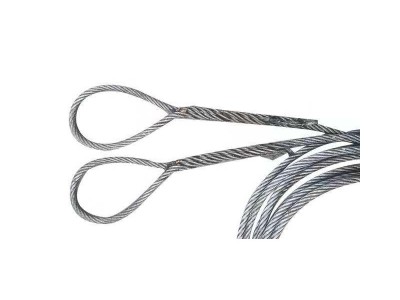
A spliced termination handles dynamic fatigue through a gradual structural transition from the rope body into the eye loop. Without a rigid mechanical constraint, the load transfers smoothly through the woven strands, distributing fatigue stress across a longer length of rope. Consequently, a spliced steel wire rope sling offers high fatigue strength and impact toughness, remaining structurally stable under variable and shock loads. Hand-spliced eyes provide material flexibility that mechanical terminations cannot match, translating directly into a longer service life for every spliced steel wire rope sling you put into service.
Gradual vs. Sudden Failure: Which Is Safer?
The structural predictability of a termination method directly impacts site safety, as the failure modes of these two configurations differ significantly under extreme tension:
Pressed Aluminium Sleeve Slings (Sudden Failure): Mechanical sleeves tend to fail catastrophically and without warning. The metal collar maintains its frictional grip until it reaches critical stress, at which point it releases the wire rope completely, causing a sudden drop of the load with no prior visible deformation.
Spliced Steel Wire Rope Slings (Gradual Failure): A spliced steel wire rope sling fails progressively. As the assembly approaches its limit or undergoes extensive wear, individual outer strands fracture one at a time, allowing operators to visually detect the degradation.
This progressive deterioration serves as a built-in safety indicator rather than a minor convenience. It provides riggers and site supervisors with a clear window of time to identify damage during routine pre-use inspections and retire the equipment before a hazardous failure occurs. Under standard working loads, the wires within a spliced steel wire rope sling do not snap simultaneously; instead, they display visible, traceable signs of wear that remain completely hidden from view when concealed beneath a pressed metal sleeve. For crane and rigging managers, this difference in inspection clarity is often the deciding factor for safety compliance.
Standards for Spliced Steel Wire Rope Slings
Regulatory engineering standards differentiate heavily between termination mechanics. For instance, specialized heavy-lifting products, such as the spliced steel wire rope slings manufactured by GN Ocean Engineering Equipment, are engineered strictly to EN13411-3, GB/T16761, and GB/T16762 specifications. Additionally, EN 13414-1 (the harmonized European standard for wire rope assemblies) mandates a working coefficient or safety factor of 5:1. This established margin ensures that a sling rated for a Working Load Limit (WLL) of 5 tons possesses a minimum structural breaking strength of 25 tons.
These manufacturing parameters demand strict adherence to documented material tolerances rather than arbitrary calculations:
Core Configurations: Load limits are distinct for both hemp core and steel core ropes.
Dimensional Range: Specifications cover exact wire diameters ranging from 6mm to 16mm.
Material Strength: The technical data incorporates 6×37 (M) type steel wire rope rated at 1670 MPa and 6×19 (M) type rated at 1770 MPa.
When procurement teams order a certified spliced steel wire rope sling, they receive a component engineered to sustain integrity under verified load extremes. While properly manufactured pressed aluminium sleeves can technically comply with identical safety coefficients, the underlying standards evaluate the sleeve under ideal conditions. Splicing removes reliance on external component perfection by integrating the safety margin directly into the steel wire weave itself.
Best Applications for Each Termination
Context matters. Pressed aluminium sleeves are not useless. They have their place. But for heavy‑duty work, a spliced steel wire rope sling is the professional’s choice. The table below outlines where each type shines and where it falls short.
| Termination Method | Best Application | Key Limitation |
|---|---|---|
| Pressed Aluminium Sleeve | Light to medium duty, indoor use, clean environments, low‑cycle applications | Single point of failure, poor heat resistance, galvanic corrosion risk, hidden defects |
| Hand‑Tucked Splice (Spliced Steel Wire Rope Sling) | Heavy lifting, offshore, marine, high‑cycle operations, dynamic loads, high‑heat environments | Requires skilled labor, longer production time, and slightly higher initial cost |
Pressed sleeves work well for general‑purpose slings that see occasional use in controlled environments. They are cost‑effective. They are fast to produce. For a warehouse hoist that lifts the same pallets day after day, a pressed sleeve is probably fine. But for offshore platform construction, where salt spray, dynamic loads, and extreme conditions are the norm? For shipyard rigging, where a sling failure could drop a multi‑ton component onto workers below? For any application where the sling sees hundreds or thousands of lift cycles? The spliced steel wire rope sling is the clear winner. Many lifting superintendents now mandate a spliced steel wire rope sling for all critical lifts over a certain weight.
Is the Splice Worth the Extra Cost?
Hand‑spliced slings cost more than pressed sleeve slings. There is no getting around that. Splicing requires skilled labor. It takes time. A hydraulic press can crank out pressed sleeves in seconds. A hand‑tucked splice takes minutes, sometimes longer, depending on the rope diameter and the skill of the rigger.
But cost‑per‑lift tells a different story. A spliced steel wire rope sling lasts longer. It handles more cycles. It can be repaired—splices can be re‑done, eyes can be re‑formed. A pressed sleeve sling? Once the sleeve is compromised, the sling is scrap. You cut off the termination and start over, losing length in the process. Over the life of the sling, the spliced steel wire rope sling often works out cheaper on a cost‑per‑lift basis. And then there is the cost of failure. A dropped load. Damaged equipment. Injured workers. Shut‑down operations. These costs dwarf the price difference between a pressed sleeve and a spliced termination. When you are lifting heavy loads in critical applications, you are not buying a sling. You are buying safety and reliability. That is why a spliced steel wire rope sling is the smarter long‑term investment.
Verifying Quality in Spliced Steel Wire Rope Slings
Not all splices are created equal. Here is what to look for when you receive a spliced steel wire rope sling from your supplier:
Standards compliance: EN13411‑3, GB/T16761, GB/T16762—these are not optional.
Safety factor: Minimum 5:1 for general lifting service.
Rope construction: 6×37 or 6×19 types are standard, with a clear specification of MPa rating.
Customization: Ring eye dimensions (A and B) should be customizable to your specific needs.
Visible inspection: Every strand should be visible and accessible for pre‑use checks.
Core type: Hemp core vs. copper core—each has different WLL ratings, so verify which one matches your load requirements.
The GN Ocean Engineering product page provides all of this information transparently. The WLL table is right there. The standards are listed. The customization options are clear. That level of transparency is a good sign. It means the manufacturer knows what matters and is not hiding behind vague specifications. When you specify a spliced steel wire rope sling from a supplier that publishes these details, you reduce the risk of receiving substandard gear.
Conclusion
Choosing between a spliced steel wire rope sling and a pressed sleeve is a critical safety decision for the entire service life of your rigging. While pressed sleeves reduce upfront costs, a manual splice provides essential redundancy, clear visibility, and a gradual failure mode that warns operators before catastrophe. In harsh offshore, marine, or heavy construction environments, this is the difference between reliable performance and sudden failure. Equipping your crane with a spliced steel wire rope sling proves how much you value your crew, your assets, and your reputation.
Ready to Upgrade Your Lifting Operations?
Do not risk critical lifts on a single pressed sleeve that can hide internal defects or fail without warning. A spliced steel wire rope sling delivers the structural visibility, durability, and safety margin that heavy-duty applications demand.
Contact GN Ocean Engineering Equipment today to discuss your specific requirements, including custom diameters, eye dimensions, and rope constructions. Get a high-performance sling built strictly to EN13411-3 standards with a 5:1 safety factor. Request a quote today to experience the premium spliced difference.