

Resumo
Choosing the right bow shackle size can mean the difference between a safe, efficient lift and a serious rigging failure. For industrial buyers, rigging professionals, and procurement teams, understanding key specifications like Working Load Limit (WLL), dimensions, material grades, and application demands is critical when selecting a G(S)-209 Bow Shackle or similar American standard forged shackles.
Using an undersized or mismatched shackle not only compromises safety but also leads to premature wear, unexpected downtime, and higher long-term costs. In this guide, we break down practical shackle sizing methods, load calculations, environmental factors, and compliance requirements based on ASME, EN, and AS standards — helping you make confident procurement decisions for marine, construction, and heavy industrial applications.
Understanding Bow Shackle Specifications and Load Ratings
Key Technical Parameters in Shackle Selection
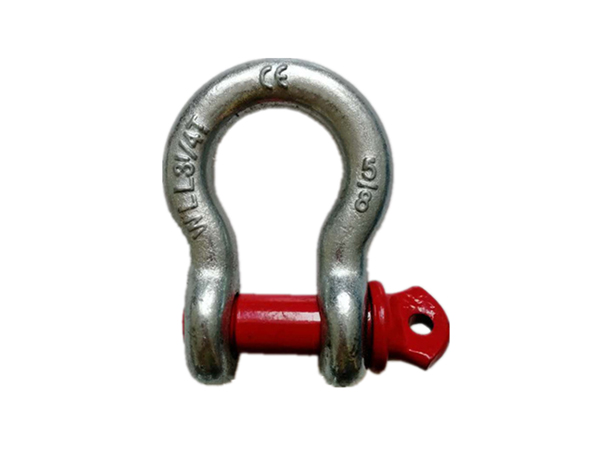
The Working Load Limit (WLL) shows the maximum load a grilhão em arco can safely handle under normal rigging conditions. It already builds in a safety factor — typically 5:1 for carbon steel shackles and 6:1 for alloy steel versions — based on the ratio between ultimate tensile strength and rated capacity. This safety buffer is what protects against unexpected failure.
Material grade has a big impact on both capacity and durability. Main options include:
- G-209 Carbon Steel: Cost-effective choice for general-purpose lifting with moderate loads.
- G-2130 Alloy Steel: Better strength-to-weight ratio for demanding industrial applications.
- G-2150 Alloy Steel: Premium grade for maximum capacity in compact sizes.
Different alloys affect strength, impact resistance, and long-term fatigue performance.
Pin diameter is another key detail. The pin needs to be at least as strong as the bow body to avoid becoming the weak point. Manufacturers design pins carefully to maintain strength even after threading. Common types include:
- Screw pins: Convenient for quick installation in applications with infrequent disconnection.
- Bolt-type pins (with nuts and split pins): Provide higher security in high-vibration or dynamic environments.
How Shackle Size Relates to Safe Working Load
Shackle sizing systems differ between imperial and metric standards, which can create confusion during international purchasing. Imperial sizes (like 1/2″, 3/4″, or 1″) refer to the bow body diameter, while metric uses millimeters. Important note: the size number does not directly tell you the load capacity. A 1-inch shackle is not automatically rated for one ton. Always check the manufacturer’s load chart for accurate ratings when selecting a bow shackle.
Physical size does matter, but not exactly as many people assume. A wider bow helps fit thicker slings or multiple ropes, yet the actual strength depends mostly on the cross-sectional area at the crown — the area under the highest tensile stress. The pin’s bearing area against the bow ears is another limiting factor that can cause deformation before the rest of the bow shackle reaches its limit.
When calculating safety margins, it’s useful to understand the difference between WLL, proof load, and ultimate breaking strength. Proof load (typically 2.0 to 2.5 times WLL) is the test load applied during manufacturing. Most experienced riggers prefer to use bow shackles at only 50-75% of their WLL in daily work. This extra margin helps handle dynamic loads and gradual wear over time.
Critical Sizing Factors for Rigging Applications
Matching Shackle Capacity to Sling and Load Requirements
Load angles greatly affect the real force on rigging components. In multi-leg bridle setups, the tension in each leg increases as the sling angle moves away from straight up. Simple examples:
- At 60 degrees (30 degrees from vertical), each leg carries about the full weight.
- At 90 degrees, tension increases to around 1.4 times the load.
- At 120 degrees, it can double — so you may need twice the bow shackle capacity.
Always plan for the worst possible angle during the lift.
For multi-leg lifts, such as a four-leg bridle lifting 10 tons at 45 degrees, each bow shackle may bear roughly 3.5 tons. Uneven loading can cause extra stress on some points. A safe practice is to choose bow shackles rated at least 25% higher than the calculated maximum to handle load shifts.
Compatibility with Different Slings
The grilhão em arco must fit well with your wire rope, chain, or synthetic slings. Main points to check:
- Leave 10-15% extra space in the bow width for the sling to move freely.
- For wire rope, the pin should be at least as thick as the rope to reduce bending stress.
- Synthetic slings are flexible and may wrap multiple times, so make sure the bow is wide enough to avoid choking or pinching.
Environmental and Operational Considerations
Dynamic loads (sudden starts, stops, or shocks) can create much higher forces than steady lifting. In crane work, impact factors usually range from 1.15 for smooth lifts to 2.0 for quick pickups. Lifting people requires even higher safety margins per OSHA rules.
Temperature changes can weaken bow shackles. High heat above 400°F (204°C) reduces strength in carbon steel — at 800°F it may lose half its capacity. Very low temperatures below -20°F (-29°C) can make some bow shackles more brittle. In marine or tropical offshore environments, stainless steel (304 or 316) is often preferred because regular galvanized bow shackles corrode faster in salt air.
Fatigue is important for repeated use. Even if a bow shackle handles static loads well, repeated lifting over time can cause tiny cracks to grow. In high-frequency applications like automated lines or frequent container moves, plan for replacement based on usage cycles rather than waiting for visible damage.
Industry Standards and Compliance Requirements
Regulatory Standards Governing Shackle Selection
ASME B30.26 is the main standard in North America. It sets rules for design, testing, and markings (including WLL, manufacturer, and grade). Always ask for test certificates to confirm the grilhão em arco meets the claimed capacity.
EN 13889 is the European standard. It has four material grades and requires CE marking. One key difference is that it allows higher WLL ratings for the same size compared to ASME — something to watch when buying across regions.
AS 2741 is the Australian standard. It combines ideas from ASME and EN but adds extra focus on corrosion resistance and regular re-testing for tough environments like mining and offshore work.
Proof Load Testing and Inspection
Proof load testing checks that each batch of bow shackles can handle 2.0–2.5 times the WLL without permanent damage. After testing, dimensions are measured to ensure they stay within limits. Good certificates include the test date, load applied, and traceability information.
Inspection and Rejection Criteria
Regular inspection is essential. Reject a grilhão em arco if any dimension is reduced by 10% from its original size.
Common signs to retire a grilhão em arco:
- Deep wear grooves on the pin (more than 1mm or 5% of the diameter).
- Damaged or corroded threads.
- Bow opening widened by more than 3%, bent pin, or any visible cracks.
Follow OSHA 1910.184 and LEEA guidelines for retirement decisions. Destroy or clearly mark retired bow shackles as scrap so they cannot be used again by mistake.
Practical Selection Guide and Sizing Tools
Step-by-Step Bow Shackle Sizing Methodology
Step 1: Calculate the Actual Load. Start by determining the real maximum load for your bow shackle. Begin with the gross weight of the object, then add extra factors for dynamic movement (usually 1.15 to 2.0 times), sling angles, and temperature effects. This gives you a clear baseline for the required bow shackle capacity.
Step 2: Apply Safety Margin. Choose a bow shackle with a Working Load Limit (WLL) higher than your calculated load. For normal industrial lifting, a 4:1 safety factor is common. For lifting people or critical jobs with a G(S)-209 Bow Shackle, use 5:1 or higher as required. In high-risk situations, larger margins provide extra safety.
Step 3: Check Pin and Bow Clearance. Make sure the bow shackle is big enough for your sling. Measure the sling’s diameter or thickness, then add at least 15% extra space. If multiple slings will pass through the bow shackle, calculate the total thickness and add about 20% clearance.
Step 4: Verify Full Compatibility. Double-check that everything works together with your bow shackle:
- The bow shackle WLL should meet or exceed the sling’s rating.
- Other hardware should have equal or higher capacity.
- The material should suit your environment.
Document your bow shackle selection — including calculations and standards used — for procurement records.
Bow Shackle Sizing Chart
| Shackle Size | WLL (Metric Tons) | Pin Diameter (mm) | Inside Width (mm) | Material Grade | Typical Application |
|---|---|---|---|---|---|
| 6mm / 1/4″ | 0.33 | 6 | 12 | G-209 | Light rigging, small equipment |
| 8mm / 5/16″ | 0.5 | 8 | 16 | G-209 | General purpose, <500kg loads |
| 10mm / 3/8″ | 0.75 | 10 | 19 | G-2130 | Standard lifting, wire rope 8-10mm |
| 13mm / 1/2″ | 1.0 | 13 | 22 | G-2130 | Industrial rigging, 1-ton loads |
| 16mm / 5/8″ | 1.5 | 16 | 29 | G-2130 | Medium-duty crane operations |
| 19mm / 3/4″ | 2.0 | 19 | 32 | G-2130 | Multi-ton lifting, chain compatibility |
| 22mm / 7/8″ | 3.25 | 22 | 38 | G-2150 | Heavy construction, 3-ton range |
| 25mm / 1″ | 4.75 | 25 | 44 | G-2150 | Large equipment handling |
| 32mm / 1-1/4″ | 6.5 | 32 | 54 | G-2150 | Marine/offshore, heavy loads |
| 38mm / 1-1/2″ | 9.5 | 38 | 64 | G-2150 | Extreme-duty industrial applications |
Perguntas frequentes
Q1: What is the minimum safety factor required when selecting a bow shackle for overhead lifting?
The minimum safety factor depends on regulatory jurisdiction and application specifics. ASME B30.26 implicitly requires a 5:1 design factor incorporated into WLL ratings, meaning the shackle’s ultimate strength is five times its rated capacity. However, operational practice demands selecting shackles where the actual working load represents only 20-25% of WLL (effectively 20-25:1 total safety margin) to account for dynamic loading, wear, and unforeseen conditions. OSHA regulations for personnel lifting mandate even higher margins. Always consult applicable standards and engage qualified rigging engineers for critical applications.
Q2: How do I determine if my shackle size is compatible with my wire rope diameter?
Compatibility requires both dimensional clearance and strength matching. The shackle’s inside width should exceed the wire rope diameter by at least 15% to allow free articulation without binding. Pin diameter should equal or exceed rope diameter to prevent excessive bending stress at the attachment point—smaller pins create sharp bend radii that accelerate rope fatigue. For strength matching, verify the shackle WLL meets or exceeds the wire rope’s breaking strength divided by the rope’s design factor (typically 5:1). When using wire rope slings with shackles, the sling’s rated capacity—not the rope’s breaking strength—determines the required shackle WLL.
Q3: Can I use a bow shackle rated for static loads in dynamic lifting applications?
Standard bow shackles with appropriate WLL ratings can accommodate dynamic lifting provided proper impact factors are applied during selection. Dynamic loading generates force amplification—sudden stops may produce peak loads 2-3 times the static weight. Select shackles with WLL exceeding the maximum anticipated dynamic load by the required safety margin. However, shackles should never be used in applications involving continuous high-cycle fatigue (millions of load cycles) without consulting the manufacturer’s fatigue data and implementing cycle-based replacement schedules. Specialized applications like shock loading or impact absorption require purpose-designed hardware with documented dynamic performance characteristics.
Conclusão
Proper bow shackle sizing requires a systematic evaluation of load characteristics, regulatory compliance, and specific application needs. By following standardized selection criteria — including accurate load calculations with dynamic factors, appropriate safety margins, dimensional compatibility checks, and adherence to standards like ASME, EN, or AS — industrial operators can achieve both safe operations and longer equipment life in critical rigging jobs.
Using an undersized bow shackle can lead to more than just equipment damage. It also brings serious risks of injury and regulatory violations, which is why informed selection is essential in professional rigging. On the other hand, choosing oversized shackles adds unnecessary costs and can make handling less efficient due to bulkier hardware.
The best approach is to balance technical requirements with real-world practicality. Document your decisions with clear calculations and manufacturer certifications. Combined with regular inspections following OSHA and LEEA guidelines, plus timely replacement based on wear, this creates a complete lifecycle management system that keeps your rigging operations safe and reliable.