

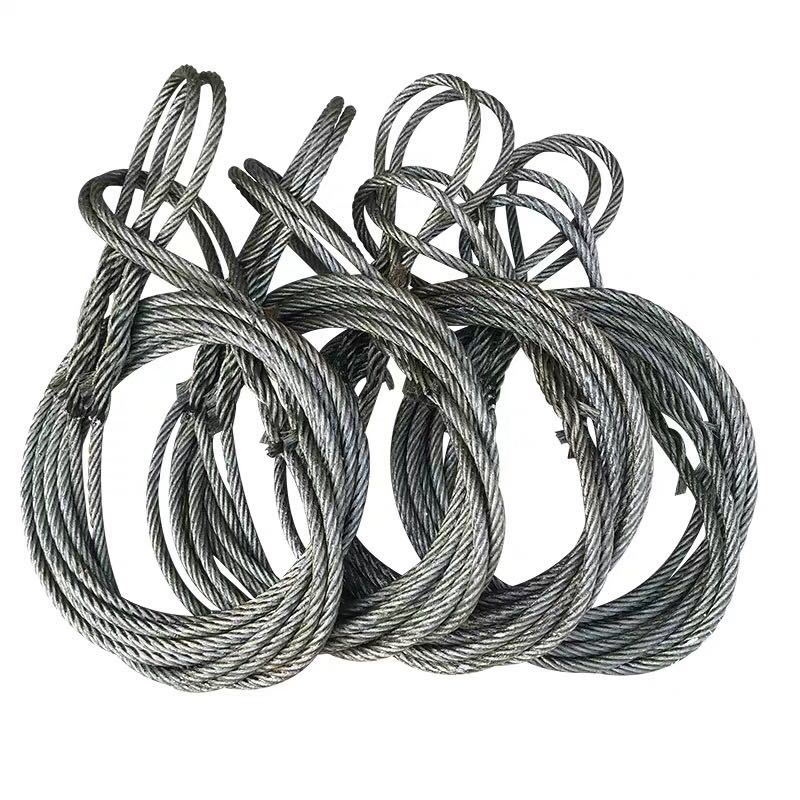
Selecting the wrong lifting sling is not a procurement error—it is a safety liability. In heavy industrial operations, the consequences of sling failure extend far beyond equipment damage: they include regulatory penalties, operational downtime, and irreversible harm to personnel. 주조 강선 로프 슬링 occupy a specific and well-defined niche in the rigging hierarchy, offering a combination of mechanical strength, end-fitting integrity, and load distribution that standard wire rope assemblies cannot consistently replicate.
This article provides procurement engineers and rigging professionals with a structured decision framework for evaluating cast steel wire rope slings against four critical variables: load weight and working load limits, lifting point configurations and sling angle reductions, environmental and operational exposure, and commercial compliance requirements. Whether you are specifying equipment for a new facility, replacing aging sling inventory, or benchmarking suppliers, the analysis below gives you the technical and commercial foundation to make a defensible, optimized choice.
1. Understanding Cast Steel Wire Rope Slings: Construction & Core Principles
1.1 Material Composition and Manufacturing Standards
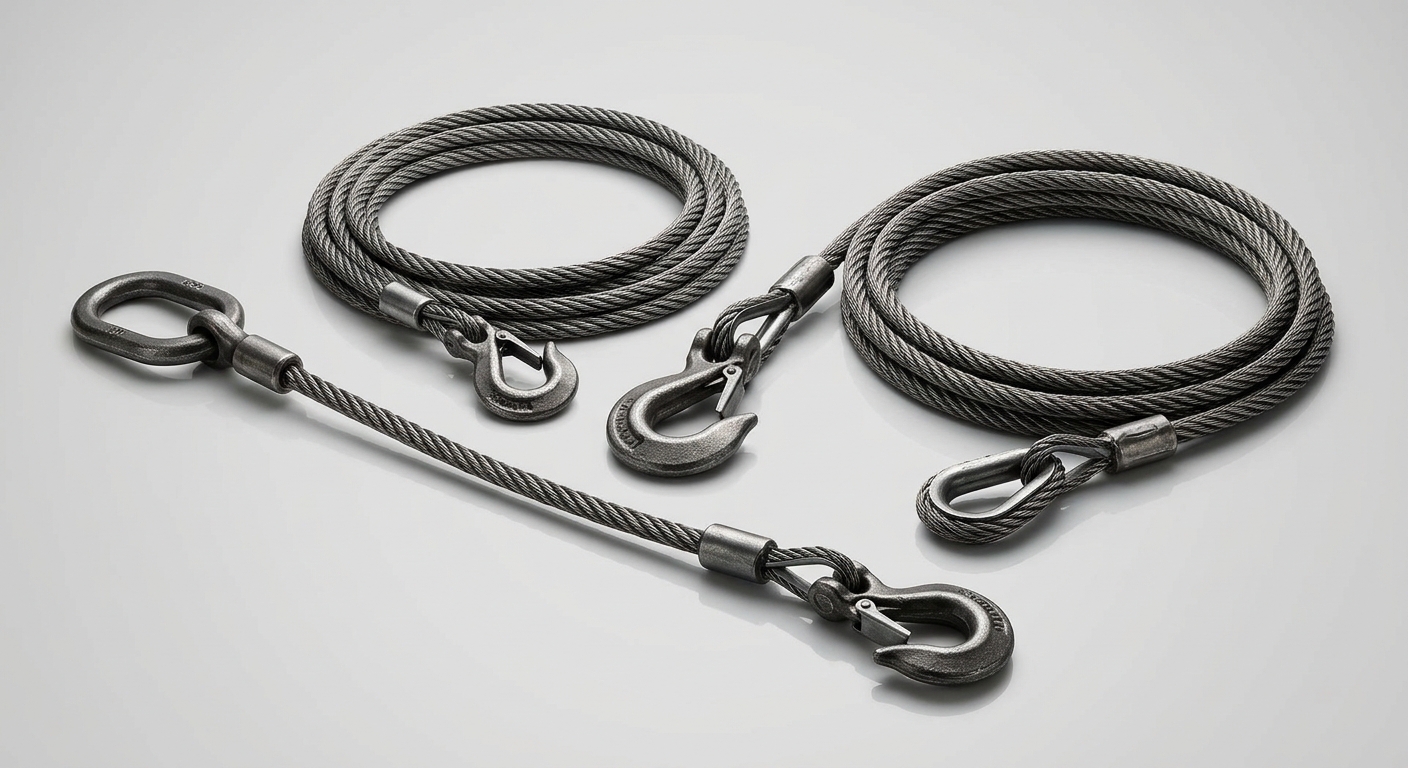
Cast steel wire rope slings are engineered assemblies combining high-tensile wire rope bodies with cast steel end fittings—typically hooks, master links, or thimble eyes—manufactured through precision casting processes. The wire rope core itself follows established strand constructions such as 6×19 or 6×37, with independent wire rope cores (IWRC) preferred in heavy-lift applications for their superior crush resistance and load-bearing cross-section.
Manufacturing compliance is non-negotiable at the specification stage. Leading suppliers conform to ASME B30.9 (North American standard for slings) and EN 13414-1/2 (European standard covering safety requirements and examination), both of which mandate proof load testing, dimensional tolerances, and material traceability. The cast steel components—particularly master rings and hook bodies—must meet minimum tensile strength grades (typically Grade 80 or Grade 100) to ensure the fitting does not become the weakest link in the assembly. Wire rope is typically manufactured from improved plow steel (IPS) or extra improved plow steel (EIPS) grades, with the latter offering approximately 15% higher breaking strength for equivalent diameter.
1.2 How Cast Steel Differs from Standard Wire Rope Slings
The critical differentiation lies at the termination point. Standard wire rope slings use either swaged (mechanically pressed) ferrule-secured eyes or hand-spliced ends. Cast steel slings replace these with precision-cast fittings that are mechanically attached and proof-load tested as an integrated unit.
This construction delivers three measurable advantages:
- Load distribution: Cast steel master links distribute multi-leg tension more uniformly, reducing stress concentration at the attachment point by up to 20% compared to pressed ferrule assemblies under equivalent loads.
- Fatigue life: Rigid cast end fittings resist the micro-movement and fretting corrosion that progressively degrades spliced or swaged terminations under cyclic loading conditions.
- Inspection reliability: The geometric consistency of cast components makes visual wear indicators (surface cracking, deformation, corrosion pitting) significantly easier to detect during routine inspections than deformation in compressed ferrule zones.
For applications involving repeated heavy lifts, asymmetric loading, or extended service intervals between inspections, cast steel terminations provide a demonstrably more durable and auditable solution.
2. Key Selection Criteria: Matching Slings to Your Lifting Job
2.1 Load Weight, WLL, and Safety Factor Calculations
Working Load Limit (WLL) is the maximum mass a sling assembly is rated to lift under specified conditions. It is derived from the catalog breaking strength divided by the design factor. Per ASME B30.9 and EN 13414, the minimum design factor for wire rope slings is 5:1—meaning a sling with a 50-tonne breaking strength carries a WLL of 10 tonnes in a straight vertical hitch.
Procurement teams must account for three common WLL miscalculations:
- Dynamic amplification: Static WLL ratings do not account for acceleration forces during crane hoisting. A 10% dynamic factor should be applied for standard crane operations; shock load scenarios require additional derating.
- Sling angle reduction: Covered in detail in Section 2.2, but angle reduction alone can reduce effective capacity by over 50%.
- Hitch type: Choker hitches reduce WLL to approximately 75% of vertical hitch capacity; basket hitches can increase it to 200% only when the load geometry supports full basket contact.
Always specify WLL at the assembly level—not just the rope body—ensuring the cast steel fittings are rated to match or exceed the rope’s capacity at the design factor.
2.2 Lifting Points, Sling Angles, and Capacity Reduction
Multi-leg sling configurations are standard in industrial lifting, but the geometric relationship between leg angle and load path directly determines usable capacity. As the angle between the sling leg and the vertical decreases, tension in each leg increases—a physics relationship that many field operators underestimate.
| Leg Configuration | Sling Angle (from vertical) | WLL Reduction Factor | Max Recommended Load (tonnes)* | Typical Application |
|---|---|---|---|---|
| 1-Leg (vertical) | 90° | 1.00 (baseline) | Per catalog WLL | Single-point lifts, symmetrical loads |
| 2-Leg bridle | 60° | 0.87 | Up to 2× single-leg WLL × 0.87 | Beam lifts, machinery with 2 lift points |
| 2-Leg bridle | 45° | 0.71 | Reduced accordingly | Wider load spans |
| 2-Leg bridle | 30° | 0.50 | 50% of 2-leg rated capacity | Avoid where possible; re-rig preferred |
| 4-Leg bridle | 60° | 1.74 (total) | Up to 4× single-leg × 0.87 | Heavy machinery, structural steel modules |
| 4-Leg bridle | 45° | 1.41 (total) | Reduced accordingly | Large fabricated assemblies |
*Consult manufacturer’s rated assembly WLL; values above are illustrative based on standard reduction factors.
Critical threshold: At 30° from vertical, a 2-leg bridle delivers only 50% of its rated capacity. Rigging plans must specify minimum included angle and enforce it on-site with angle indicators or pre-cut leg lengths.
3. Environmental & Operational Conditions That Affect Sling Selection
3.1 Corrosion, Temperature, and Chemical Exposure
Cast steel wire rope slings are not universally suited to all environments without specification adjustments. Three environmental variables require explicit evaluation:
Corrosion exposure: Standard carbon steel wire rope and cast fittings are vulnerable to surface rust in marine, offshore, or humid processing environments. Specify hot-dip galvanized wire rope (per ASTM A586) for moderate corrosion environments, or stainless steel rope with stainless cast fittings (Grade 316L) for chemical processing or food-grade applications. Note that galvanizing reduces wire rope breaking strength by approximately 10%, which must be reflected in WLL calculations.
Temperature limits: Cast steel slings operate within a standard service range of -40°C to +150°C. Above 150°C, wire rope lubrication degrades, and steel tensile strength begins to reduce measurably—derate WLL by 10% between 150°C and 200°C, and by 25% above 200°C. Slings must never be used above 400°C. Below -40°C, impact toughness of standard carbon steel cast fittings decreases; specify low-temperature impact-tested steel (Charpy V-notch tested per EN 10045) for cryogenic or Arctic applications.
Chemical exposure: Acidic environments (pH < 6) accelerate hydrogen embrittlement in high-strength steel components. Alkaline environments above pH 11 can attack zinc coatings. In chemical plants or refineries, specify material compatibility with the specific process chemicals present—this is a supplier documentation requirement, not a field judgment.
3.2 Dynamic Loading, Shock Loads, and Fatigue Cycles
Cast steel end fittings exhibit excellent static strength but are sensitive to repeated shock loading. A shock load—defined as any sudden application of force exceeding 2× the static load—can initiate micro-cracking in cast components that is not visible externally but significantly reduces residual strength.
Operational guidelines:
- Implement controlled lift procedures with maximum crane hoist acceleration rates specified in the rigging plan.
- Track cumulative lift cycles where possible; high-frequency applications (>500 lifts/year) warrant quarterly inspection intervals rather than the standard annual schedule.
- Per OSHA 1910.184, slings must be removed from service when wire rope shows 10 or more broken wires in any rope lay, when cast fittings show visible cracks, deformation, or wear exceeding 10% of original cross-section, or when identification markings are no longer legible.
Fatigue-driven retirement is often more relevant than corrosion in high-throughput manufacturing environments—document lift counts to optimize replacement scheduling and avoid unplanned failures.
4. Commercial & Compliance Considerations for Industrial Buyers
4.1 Certifications, Traceability, and Documentation Requirements
Industrial procurement teams operating under ISO 9001 quality systems or site safety management frameworks must require a minimum documentation package from any cast steel wire rope sling supplier:
- CE Marking (for EU/UK sites): Confirms conformity with Machinery Directive 2006/42/EC and EN 13414.
- Material Test Certificate (MTC): Per EN 10204 3.1 or 3.2, providing chemical composition and mechanical properties traceable to the specific batch.
- Proof Load Test Certificate: Individual test records for each assembly, typically at 2× WLL.
- Third-Party Inspection Reports: DNV, Bureau Veritas, or equivalent for offshore and critical-lift applications.
- Batch Traceability: Unique serial numbers on cast fittings enabling full supply chain traceability from raw material to delivery.
Suppliers unable to provide 3.1 MTCs and proof load certificates per assembly should be disqualified from critical-lift supply chains regardless of unit price.
4.2 Total Cost of Ownership vs. Unit Price
Cast steel wire rope slings carry a higher unit price than synthetic fiber slings or standard swaged assemblies—typically 30–60% more depending on specification. However, total cost of ownership (TCO) analysis consistently favors cast steel in heavy industrial applications:
| Cost Factor | Cast Steel Wire Rope Sling | Synthetic Fiber Sling |
|---|---|---|
| Service life (heavy use) | 3–7 years | 1–3 years |
| Inspection interval | Annual (or per cycle count) | Before each use |
| UV/chemical sensitivity | Low | High |
| Heat resistance | Up to 150°C standard | Limited (typically <100°C) |
| Replacement frequency | Low | High |
| Downtime risk per failure | High consequence, low frequency | Moderate frequency |
For a facility performing 200+ heavy lifts per year, the reduced replacement frequency and lower per-lift inspection burden of cast steel slings typically offset the price premium within 18–24 months of operation.
자주 묻는 질문
Q1: What is the maximum load capacity for cast steel wire rope slings, and how is WLL determined? Cast steel wire rope slings are available in WLL ratings from under 1 tonne to over 100 tonnes for multi-leg assemblies, depending on rope diameter, grade, construction, and fitting rating. WLL is calculated as breaking strength ÷ design factor (minimum 5:1 per ASME B30.9). Always verify that both the rope body and cast fittings are rated at the assembly WLL—not just the rope component.
Q2: Can cast steel wire rope slings be used in high-temperature or corrosive environments without performance loss? Standard cast steel slings perform reliably up to 150°C. Above this threshold, derating is required. For corrosive environments, specify galvanized or stainless steel variants and confirm chemical compatibility with the supplier. Uncoated carbon steel slings should not be used in marine splash zones or acidic process environments without protective measures.
Q3: What certifications should I require from a cast steel wire rope sling supplier to meet site compliance standards? At minimum, require CE marking (EU/UK), EN 10204 3.1 MTC, individual proof load test certificates, and batch serial traceability. For offshore or critical-lift applications, add third-party inspection reports from a recognized certification body (DNV GL, Bureau Veritas, Lloyd’s Register).
결론
Cast steel wire rope slings represent the technically superior choice when your application combines heavy loads (typically above 5 tonnes), multi-leg configurations, demanding environmental conditions, or stringent compliance requirements. The cast end-fitting construction delivers fatigue resistance, inspection reliability, and load distribution that swaged or spliced alternatives cannot consistently match across a multi-year service life.
For procurement teams, the decision framework is straightforward: calculate WLL at the assembly level with appropriate angle and hitch factors, specify the correct material grade for your operating environment, and demand full documentation traceability from your supplier. The 30–60% unit price premium is recovered through extended service life and reduced operational risk within two years in high-utilization applications.
Ready to specify cast steel wire rope slings for your next project? Contact our technical team for a load-specific configuration review, compliance documentation package, or sample request tailored to your site requirements.