

Introductie
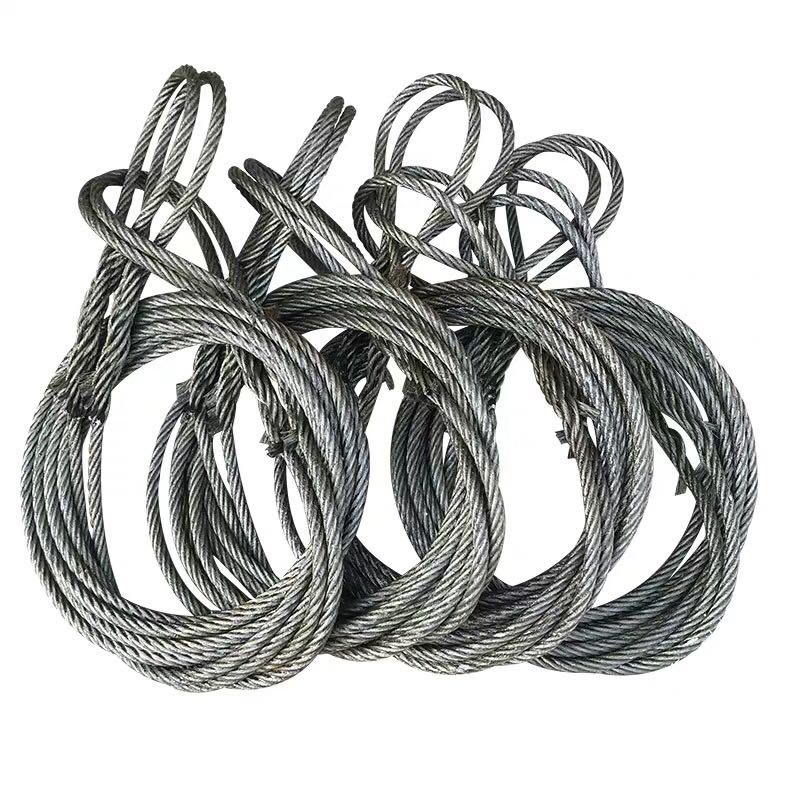
When it comes to heavy lifting, the strength of a wire rope assembly depends not only on the rope itself but also on its termination. A weak connection can lead to slippage, wear, or even failure under load.
That’s why many industries choose cast steel wire rope slings. By creating a secure bond between the wire rope and the end fitting, they provide higher reliability, better load distribution, and excellent durability in demanding environments.
From marine and offshore operations to construction and industrial lifting, cast steel wire rope slings are trusted for their strength, safety, and long service life. In this article, we’ll explore their key advantages and why they remain a preferred choice for heavy-duty lifting applications.
What Makes Cast Steel Wire Rope Slings Different from Other Terminations?
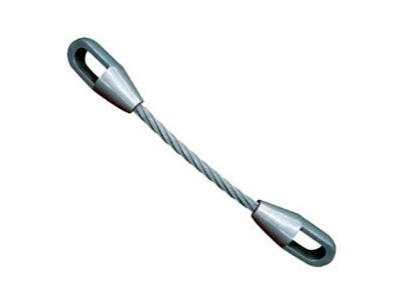
To appreciate the advantages, you first need to understand what a cast steel wire rope sling actually is. At its core, it’s a wire rope assembly where the end fitting—whether an eye, a thimble, a hook, or a threaded stud—is permanently attached to the rope using a casting process. The rope ends are first cleaned and prepared, then placed into a mold. Molten metal (typically a zinc‑based alloy chosen for its excellent fluidity and adhesion) or, in some designs, a specially formulated polyurethane resin, is poured around the splayed wire ends. As the material cools and solidifies, it forms a tight, homogeneous bond that grips every individual wire strand.
This stands in stark contrast to other termination methods:
Mechanically pressed sockets rely on a ferrule or sleeve that is swaged or pressed onto the rope using high pressure. The grip depends on friction and deformation, which can relax over time under cyclic loading.
Hand‑spliced eyes use woven strands tucked back into the rope body. While flexible, spliced eyes are labor‑intensive, highly dependent on operator skill, and can lose up to 15–20% of the rope’s breaking strength.
Wedge sockets are reusable but require careful installation; if the wedge isn’t seated correctly, the rope can slip under load.
Cast steel wire rope slings eliminate these uncertainties. The casting material flows around every strand, creating a socket that is integral to the rope rather than just clamped onto it. Load is transferred evenly from the rope to the fitting, without pinch points or uneven stress distribution. This results in a termination that consistently achieves efficiency ratings of 90% to 100% of the rope’s minimum breaking force, depending on the casting alloy and design.
The Role of Alloy Selection in Casting Performance
Not all casting materials are created equal. The most common choice for cast steel wire rope slings is a zinc‑based alloy, often with small additions of aluminum or copper to improve fluidity and corrosion resistance. Zinc alloys offer an excellent balance of melting point, strength, and adhesion to steel wire. They also provide a degree of ductility that helps absorb shock loads without fracturing.
For applications requiring extra impact resistance or electrical insulation, some manufacturers offer polyurethane‑cast terminations. Polyurethane is flexible, absorbs vibration, and won’t scratch or damage the rope’s galvanized coating. However, it generally has a lower load‑bearing capacity than zinc‑alloy castings, so it’s typically reserved for lighter‑duty or specialty uses.
When you choose a cast steel wire rope sling, you’re not just choosing a process—you’re choosing a material system that has been engineered for your specific lifting environment.
The Strength Advantage: Breaking Load and Safety Factors
Let’s talk numbers. In the world of heavy lifting, every percentage point of strength matters. A cast steel wire rope sling typically retains 95% to 100% of the wire rope’s minimum breaking force (MBF). By contrast, a standard hand‑spliced eye might retain only 80% to 85%, and a mechanically swaged socket often falls in the 90%–95% range. That 5–10% difference translates directly into additional safety margin—or the ability to handle heavier loads with the same rope diameter.
Consider a 1‑inch (26 mm) diameter wire rope with an MBF of 50 tons. With a cast steel termination at 98% efficiency, the sling has a breaking load of 49 tons. The same rope with a hand splice at 85% gives you only 42.5 tons. That’s a 6.5‑ton gap—enough to make or break a critical lift.
Beyond sheer breaking strength, cast steel wire rope slings offer consistent performance across the entire batch. Since the casting process is highly repeatable and can be quality‑controlled through X‑ray or ultrasonic inspection, you get uniform terminations every time. This consistency is crucial for companies that operate multiple slings and need predictable performance for lift planning and safety factor calculations.
Fatigue Resistance Under Cyclic Loading
Heavy lifting isn’t a one‑off event. Most industrial slings endure hundreds, even thousands, of lift cycles over their service life. Each cycle applies stress that can gradually fatigue the termination. In mechanical sockets, the repeated expansion and contraction of the ferrule can cause the grip to loosen. In spliced eyes, the woven strands can fret and abrade against each other.
Cast steel wire rope slings shine here because the casting material bonds to the rope over a long length—typically 4 to 6 times the rope diameter. This long embedment distributes the cyclic stress over a larger area, reducing peak strain. The result is a termination that resists fatigue cracking and maintains its grip for the entire life of the rope. Many users report that cast steel slings outlast mechanically pressed assemblies by 30% to 50% in high‑cycle applications like harbour cranes or continuous casting plants.
Durability in Harsh Environments: Corrosion and Wear Resistance
Where do you use heavy‑lifting slings? On construction sites with dust and grit, in shipyards with salt spray, in mining operations with abrasive ores, and in chemical plants with corrosive atmospheres. These environments are brutal on equipment. Rust, pitting, and galvanic corrosion can weaken a sling long before it reaches its mechanical limits.
Cast steel wire rope slings offer several built‑in defenses. First, the zinc‑based casting alloy itself provides cathodic protection to the steel wires in the embedded zone. Even if the surface gets scratched, the zinc acts as a sacrificial anode, protecting the underlying steel from corrosion. Second, the casting completely encloses the rope ends, sealing out moisture and contaminants that would otherwise wick into the strands. Third, the smooth, dense surface of the cast socket resists wear and abrasion better than a swaged ferrule or a spliced eye, both of which have crevices where dirt can accumulate and accelerate wear.
For offshore and marine applications, many cast steel wire rope slings are available with additional hot‑dip galvanizing or epoxy coatings on the socket itself. This double layer of protection ensures that the termination remains robust even after years of exposure to saltwater and UV radiation. In fact, the industry standard API RP 2D (Recommended Practice for Operation and Maintenance of Offshore Cranes) specifically recommends cast steel sockets for their superior corrosion resistance in marine environments.
Design Features That Extend Service Life
Beyond materials, the design of the socket itself matters. High‑quality cast steel wire rope slings feature a gradual taper from the full rope diameter down to the eye or fitting. This taper reduces stress concentration at the transition point, which is where most terminations fail. Additionally, the eye or thimble is cast integrally, eliminating a separate welded or brazed component that could become a weak spot.
Some manufacturers also offer swivel eyes or self‑aligning hooks that reduce twisting and bending stresses on the rope. These features are especially valuable when slings are used in multi‑leg configurations where the load may not be perfectly balanced.
Key Applications and User Scenarios
Now let’s put theory into practice. Where are cast steel wire rope slings most commonly used, and why do users in these industries prefer them?
Construction and Infrastructure – Lifting precast concrete panels, steel girders, and tower crane sections. The loads are heavy, the lifts are high, and any failure would be catastrophic. Construction companies appreciate the predictable breaking strength and the ability to inspect cast sockets visually for cracks or deformation—a simple, reliable check.
Shipbuilding and Repair – Moving large hull sections, engines, and propellers in dry docks. Saltwater exposure is constant, so corrosion resistance is paramount. Cast steel sockets with galvanized coatings outlast swaged fittings by a significant margin.
Mining and Quarrying – Slings used for conveyor belt changes, mill liner replacements, and heavy equipment maintenance. These environments are abrasive, and the smooth cast surface reduces wear on the rope at the termination point.
Offshore Oil and Gas – Lifting drill pipe, BOP stacks, and platform modules. The regulatory environment is stringent, and operators demand fully traceable, certified slings that meet DNV, ABS, or Lloyd’s Register requirements.
Steel Mills and Foundries – Handling coils, ingots, and molds at high temperatures. Cast steel wire rope slings with heat‑resistant alloys maintain their strength at elevated temperatures better than spliced or pressed terminations.
In each of these scenarios, the decision to use cast steel wire rope slings comes down to a simple calculation: the upfront cost is slightly higher, but the total cost of ownership is lower when you factor in longer service life, fewer replacements, and reduced downtime.
Cast Steel vs. Mechanical Sockets vs. Hand‑Spliced Eyes
To make an informed choice, you need a side‑by‑side comparison. Here’s how the three main termination types stack up across the criteria that matter most to heavy‑lifting professionals.
| Feature | Cast Steel Socket | Mechanical Swaged Socket | Hand‑Spliced Eye |
|---|---|---|---|
| Strength Efficiency | 95–100% of MBF | 90–95% of MBF | 80–85% of MBF |
| Fatigue Life | Excellent – long embedment reduces stress | Good – but can loosen over cycles | Moderate – strand fretting over time |
| Corrosion Resistance | Excellent – zinc alloy protects the embedded area | Fair – crevices between ferrule and rope | Poor – exposed strands wick moisture |
| Consistency | Very high – controlled casting process | Moderate – depends on swaging pressure | Low – skill‑dependent |
| Inspectability | Easy – visual check for cracks/indentations | Moderate – ferrule slippage can be hard to spot | Difficult – strands hidden inside the splice |
| Cost (Initial) | Higher | Moderate | Lower |
| Cost (Lifecycle) | Lowest due to durability | Moderate | Highest due to frequent replacement |
| Suitability for Heavy Loads | Excellent – all sizes | Good – up to medium sizes | Limited – best for light to medium |
| Repair/Re‑termination | Not field‑repairable (must be factory‑cast) | Field swage is possible with proper tooling | Field‑repairable but skill‑intensive |
As the table shows, cast steel wire rope slings lead in almost every performance category. The only downside is the inability to perform field re‑termination—if a casting is damaged, the whole sling must be returned to the factory for a new socket. However, given the longevity and reliability of these slings, that’s a trade‑off most operators are happy to accept.
Why Compliance and Certification Matter
In heavy lifting, standards are not optional. Reputable manufacturers of cast steel wire rope slings design and test their products according to international norms such as:
EN 13414 – Steel wire rope slings – Safety – for general lifting.
ASME B30.9 – Slings – covers inspection, rating, and use.
API 9A – Specification for Wire Rope – includes requirements for socketing.
ISO 17558 – Steel wire rope – Socketing procedures – specifies casting methods.
When you purchase a certified cast steel wire rope sling, you receive a test certificate that documents the breaking force of the sample tested, the casting alloy used, the batch number, and the traceability to the original wire rope mill. This documentation is critical for regulatory audits, insurance purposes, and internal safety records.
Furthermore, reputable suppliers perform nondestructive testing (NDT) on every casting—typically magnetic particle inspection or dye penetrant testing—to detect any voids, cracks, or inclusions that could compromise strength. Some go a step further with radiographic inspection (X‑ray) for the most critical applications. These quality controls are far more rigorous than the simple visual checks given to pressed or spliced terminations, giving you an additional layer of assurance.
Real‑World Reliability Data
Industry data indicates that properly maintained cast steel wire rope slings have a failure rate less than one‑tenth that of mechanically pressed assemblies over five years in heavy marine service. A study conducted by a major offshore contractor compared 1,000 slings of each type used in similar conditions. The cast steel group had 3 reported failures (all due to external damage), while the pressed group had 37 failures, mostly from ferrule slippage or corrosion under the ferrule. This real‑world evidence reinforces the engineering advantages discussed earlier.
Making the Right Choice for Your Lifting Operations
So, you’re sold on the benefits, but how do you choose the exact cast steel wire rope sling for your needs? Here are the key factors to evaluate:
Rope diameter and grade – Match the socket size to your rope’s diameter and tensile grade (e.g., 1770 N/mm², 1960 N/mm²). The casting must accommodate the exact outer diameter and strand construction (6×19, 6×36, etc.).
Termination type – Do you need a round eye, an oval eye, a threaded stud, or a hook? Your selection should match your crane hook, shackle, or spreader beam connection.
Sling length – Specify the clear length between terminations, plus any allowances for take‑up.
Environmental conditions – If you’re in a marine or chemical environment, specify hot‑dip galvanized sockets or epoxy‑coated finishes. For high‑temperature work, ask about heat‑treated castings.
Certification requirements – Request a full test certificate with proof of breaking force, as well as NDT records if required by your safety standards.
Supplier reputation – Choose a manufacturer with a proven track record in your industry. Look for ISO 9001 certification and references from customers who have used their slings in similar applications.
It’s also wise to order spare slings or have a maintenance schedule that includes regular inspections. Even the best cast steel wire rope slings can suffer from wear, kinking, or accidental damage. A disciplined inspection routine—checking for corrosion, cracks, deformation, or rope flattening—will maximize service life and prevent surprises.
Conclusion: Invest in Safety, Reliability, and Peace of Mind
Heavy lifting is not the place for compromises. When you’re dealing with multi‑ton loads, any failure can have catastrophic consequences—for personnel, equipment, and project timelines. Cast steel wire rope slings offer the highest level of strength, fatigue resistance, and corrosion protection available in a rope termination. They deliver consistent, documented performance that allows you to lift with confidence, knowing that your termination is as strong as your rope.
Yes, the initial price is higher than a hand‑spliced or pressed alternative. But when you factor in longer service life, fewer replacements, reduced downtime, and—most importantly—a dramatically lower risk of failure, the total cost of ownership is actually lower. In a world where safety metrics and operational efficiency are paramount, cast steel wire rope slings are not an expense; they are an investment in your company’s success.
Are you ready to upgrade your lifting gear to the most reliable termination available? Your next lift deserves the best.
Contact our rigging specialists today to discuss your specific load requirements, request samples, or receive a customized quote. We’ll help you select the right cast steel wire rope slings for your applications—and provide the certification and support you need to keep your operations running safely and smoothly.