

Abstract
Selecting the wrong grommet sling size is not a minor procurement error — it is a safety-critical failure waiting to happen. Undersized slings risk catastrophic overload; oversized selections inflate cost and reduce operational agility. For rigging engineers and procurement teams operating in heavy industry, offshore, or port logistics, getting the size right from the first order is both a compliance requirement and a bottom-line imperative.
This guide provides a structured, technically grounded approach to grommet sling sizing. It covers the fundamental mechanics of how grommet slings distribute load, the key variables that govern size selection, a practical step-by-step sizing methodology, applicable international standards, and material considerations that directly affect working load limits (WLL). A reference size chart is included to support specification work, along with procurement guidance for RFQ documentation. Whether you are specifying a single sling for a critical lift or standardizing a fleet-wide rigging inventory, this guide gives you the technical foundation to make confident, compliant decisions.
Understanding Grommet Sling Fundamentals
What Is a Grommet Sling and How Does It Work?
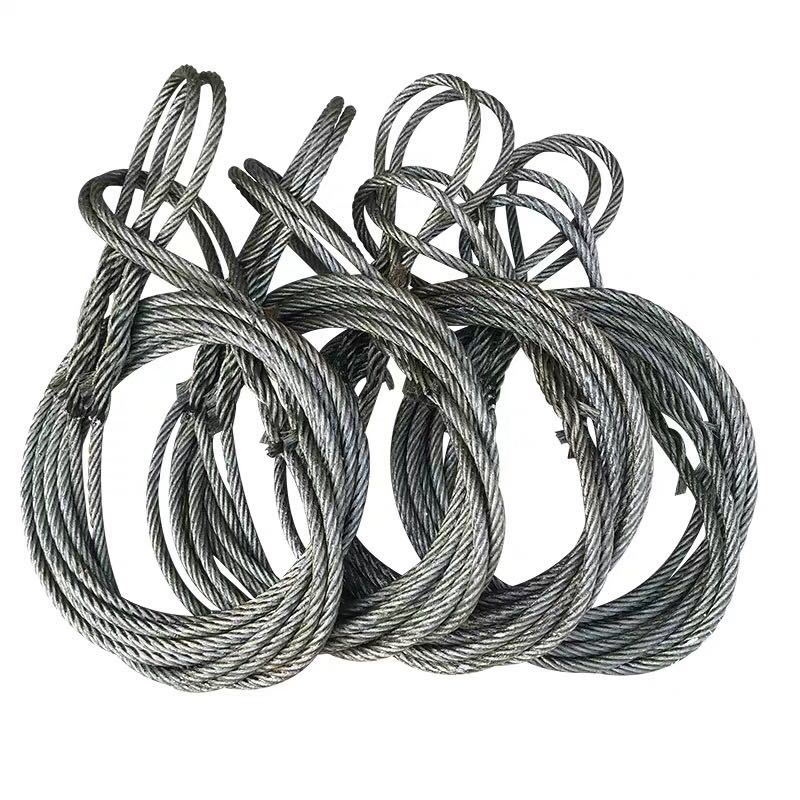
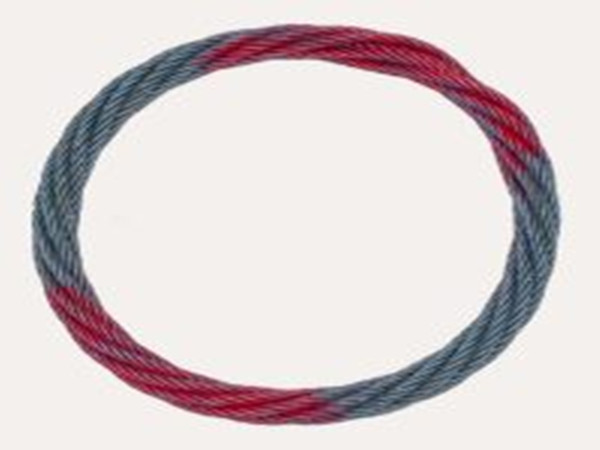
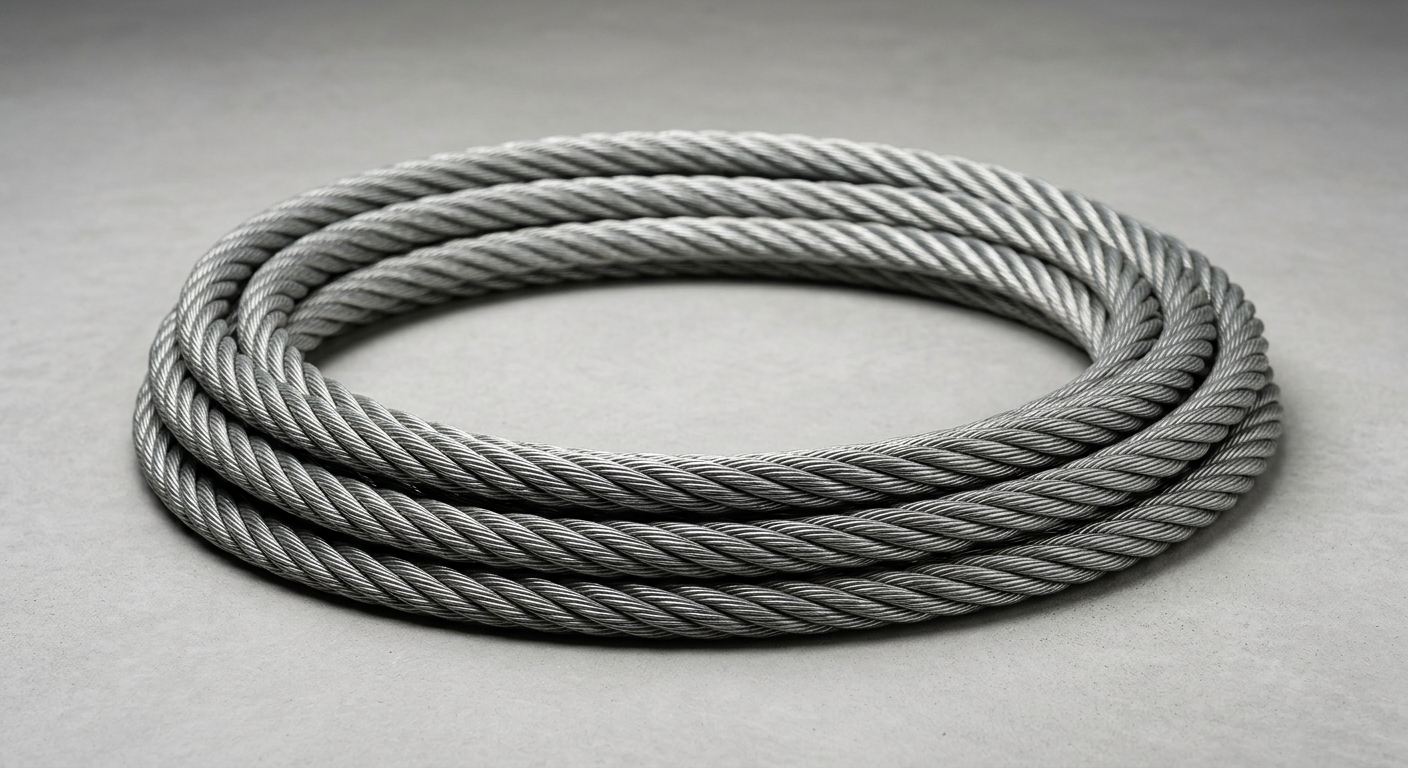
A grommet sling — also called a wire rope grommet — is a continuous, closed-loop lifting sling constructed from a single length of wire rope laid helically around a core strand to form an endless ring. Unlike conventional eye-and-eye slings, there are no mechanical terminations, ferrules, or spliced ends. The load is distributed across the entire cross-section of the rope simultaneously, which is the defining mechanical advantage of the grommet design.
This continuous-loop construction means that when the sling is placed under tension, every strand contributes proportionally to load-bearing capacity. The result is a more uniform stress distribution compared to slings with end fittings, which can introduce localized stress concentrations. This characteristic makes grommet slings particularly well-suited for high-cycle, high-load applications where fatigue resistance and consistent performance are non-negotiable.
Compared to single-leg wire rope slings or synthetic web slings, grommet slings offer superior abrasion resistance, higher WLL-to-diameter ratios in certain configurations, and the flexibility to be used in vertical, choker, and basket hitch arrangements without additional hardware.
Key Sizing Variables You Must Know Before Ordering
Four interdependent parameters govern grommet sling sizing:
- Nominal Diameter (d): The cross-sectional diameter of the rope body, measured in millimeters or inches. This is the primary reference for WLL tables.
- Circumference: The total loop length of the grommet, which determines the effective reach and the geometry of the lift. Specified separately from diameter.
- Working Load Limit (WLL): The maximum mass a sling is rated to lift under defined conditions. WLL is diameter-dependent and hitch-configuration-dependent.
- Core and Strand Construction: Common constructions include 6×7, 6×19, and 6×36. Higher strand counts (e.g., 6×36) provide greater flexibility and fatigue resistance; lower counts (e.g., 6×7) offer higher rigidity and abrasion resistance. The construction directly affects the minimum D/d ratio requirement and, consequently, the effective WLL in use.
These variables do not operate in isolation. A sling with the correct diameter but an incompatible D/d ratio for the shackle or hook will have its rated WLL reduced in practice.
How to Determine the Right Grommet Sling Size
Step-by-Step Sizing Methodology
Step 1 — Establish the Total Load Weight. Determine the gross weight of the load, including any rigging hardware, spreader beams, or secondary attachments. Apply a dynamic load factor of 1.1–1.3 for loads subject to shock or acceleration during lifting operations.
Step 2 — Select the Hitch Configuration. The hitch type directly multiplies or reduces the effective load per sling leg:
- Vertical (single leg): 1.0× load factor
- Basket hitch (0° sling angle): up to 2.0× WLL of single leg
- Choker hitch: approximately 0.75× WLL of single leg
Step 3 — Apply the Angle Reduction Factor. For multi-leg or basket configurations, the sling angle from vertical is critical. Use the following reduction factors:
| Sling Angle from Vertical | Load Factor Applied to WLL |
|---|---|
| 0° (vertical) | 1.00 |
| 30° | 0.87 |
| 45° | 0.71 |
| 60° | 0.50 |
A sling angled at 60° from vertical carries only 50% of its vertical WLL per leg. This is one of the most frequently underestimated variables in field rigging.
Step 4 — Apply the Design Factor (Safety Factor). EN 13414-2 and ASME B30.9 both require a minimum design factor of 5:1 for wire rope slings in overhead lifting. For critical or personnel-adjacent lifts, a 6:1 or higher factor is advisable. Select a sling diameter whose rated WLL, after angle reduction, still satisfies this factor against the actual load.
Step 5 — Verify D/d Ratio Compliance. The ratio of the fitting diameter (D) to the sling rope diameter (d) must meet minimum thresholds to preserve the rated WLL. For most wire rope grommets, a minimum D/d of 5:1 is required; falling below this threshold mandates a WLL reduction of up to 25%.
Common Sizing Mistakes That Lead to Failures
- Ignoring sling angle: Assuming a 60°-angled sling performs at full vertical WLL is the single most common field error.
- Misreading rated values: Applying the vertical WLL to a choker or angled basket configuration without adjustment.
- Incorrect core selection: Specifying a fiber-core (FC) rope in environments with heavy side loading or high temperatures, where an Independent Wire Rope Core (IWRC) is required for dimensional stability under load.
- Circumference mismatch: Ordering based on diameter alone without specifying the required loop circumference for the lift geometry.
📊 Grommet Sling Size Reference Chart
| Nominal Dia. (mm) | Nominal Dia. (in) | Circumference (m) | Weight (kg/m) | Vertical WLL (t) | 2-Leg 60° WLL (t) | 2-Leg 45° WLL (t) | Construction | Standard Ref. |
|---|---|---|---|---|---|---|---|---|
| 16 | 5/8″ | 1.0 | 1.1 | 2.8 | 2.8 | 4.0 | 6×19 IWRC | EN 13414-2 |
| 20 | 3/4″ | 1.0 | 1.7 | 4.3 | 4.3 | 6.1 | 6×19 IWRC | EN 13414-2 |
| 24 | 1″ | 1.2 | 2.5 | 6.2 | 6.2 | 8.8 | 6×36 IWRC | EN / ASME B30.9 |
| 32 | 1-1/4″ | 1.5 | 4.4 | 11.0 | 11.0 | 15.6 | 6×36 IWRC | EN / ASME B30.9 |
| 40 | 1-1/2″ | 2.0 | 6.9 | 17.2 | 17.2 | 24.3 | 6×36 IWRC | EN / ASME B30.9 |
| 48 | 2″ | 2.5 | 9.9 | 24.7 | 24.7 | 34.9 | 6×36 IWRC | EN / ASME B30.9 |
Values are indicative. Always verify against manufacturer’s certified load tables and applicable project specifications.
Compliance Standards & Material Specifications
Applicable Standards for Grommet Sling Sizing
Two primary regulatory frameworks govern grommet sling specification in global industrial markets:
EN 13414-2 (Europe): Specifies safety requirements for steel wire rope sling assemblies, including grommets. It mandates minimum design factors, marking requirements, and proof load testing protocols. CE marking under this standard requires third-party conformity assessment for slings used in overhead lifting.
ASME B30.9 (North America): Covers slings of all types including wire rope grommets. It defines WLL tables, inspection intervals, and rejection criteria. Compliance with B30.9 is typically required on regulated worksites governed by OSHA 29 CFR 1926.251.
Key compliance checkpoints for procurement teams include: traceable material certifications (mill certs), proof load test certificates at 2× WLL minimum, and documentation of the design factor applied. Third-party inspection by a recognized body (DNV, Bureau Veritas, Lloyd’s Register) is mandatory for offshore and marine lifting applications.
Material Selection Impact on Size Rating
Material specification is not a secondary decision — it directly affects the WLL assigned to a given diameter:
- IWRC vs. Fiber Core (FC): IWRC grommets maintain their cross-sectional geometry under radial compression, preserving WLL in basket and choker configurations. FC ropes compress under load, reducing effective diameter and WLL. IWRC is the standard specification for industrial grommet slings.
- Galvanized vs. Ungalvanized: Hot-dip galvanizing provides corrosion protection with a marginal (~5%) reduction in minimum breaking force. For marine and coastal environments, galvanized wire is the baseline specification.
- Stainless Steel (AISI 316): Specified for chemically aggressive environments (offshore, chemical processing). Stainless grommets carry a WLL approximately 10–15% lower than equivalent carbon steel at the same diameter due to the lower tensile grade of 316 wire. Procurement teams must account for this when sizing for equivalent load capacity.
In corrosive environments, it is common practice to upsize by one nominal diameter to compensate for long-term strength degradation and to extend inspection intervals.
Application Scenarios & Procurement Guidance
Matching Sling Size to Industry-Specific Use Cases
Offshore and Marine Lifting: Typical loads include subsea equipment modules, deck machinery, and pipeline sections. Standard specifications call for 6×36 IWRC galvanized grommets, sized to DNVGL-ST-N001 requirements, with WLL verified at 60° sling angle. Circumferences of 3–6 m are common for large module lifts.
Heavy Manufacturing and Steel Mill Operations: Coil and slab handling requires high abrasion resistance at contact points. 6×7 or 6×19 constructions with hardened outer wires are preferred. Sling diameters of 32–48 mm are typical for loads in the 10–25 tonne range.
Port and Container Logistics: Grommet slings are used in conjunction with spreader frames for irregular cargo. Basket hitch configurations dominate, requiring precise circumference specification to match load geometry. Standardized diameter sets (20, 24, 32 mm) simplify inventory management across multi-commodity terminals.
What Procurement Teams Should Specify in RFQs
A technically complete RFQ for grommet slings must include:
- Nominal diameter and circumference (both dimensions, not diameter alone)
- Required WLL at the specified hitch configuration and sling angle
- Wire rope construction (6×19, 6×36, etc.) and core type (IWRC or FC)
- Surface finish (bright, galvanized, or stainless)
- Applicable standard (EN 13414-2, ASME B30.9, or project-specific)
- Certification requirements: Mill certificates, proof load test reports, third-party inspection scope
- Quantity and delivery tolerance: For bulk orders, specify dimensional tolerance (±2% on circumference is standard) and batch traceability requirements
Veelgestelde vragen
Q1: What is the minimum safety factor I should apply when sizing a grommet sling for overhead lifting?
The minimum design factor required by both EN 13414-2 and ASME B30.9 is 5:1 (breaking strength to WLL ratio) for wire rope slings in overhead lifting. For lifts near personnel, critical infrastructure, or in dynamic load conditions, a 6:1 factor is the recommended industry practice. Always verify the applicable project specification, as some sectors (nuclear, offshore) mandate higher factors.
Q2: Can I use the same grommet sling size for both choker and basket hitch configurations?
Technically yes — the same sling can be rigged in either configuration — but the effective WLL changes significantly. A basket hitch at 0° can double the WLL of a single vertical lift, while a choker hitch reduces it to approximately 75% of the vertical rating. You must confirm that the sling’s rated WLL in each configuration meets your load requirement. Never apply the basket WLL when rigging in choker mode.
Q3: How does lifting angle affect the working load limit of my selected sling size?
Lifting angle is the most impactful variable in multi-leg sling sizing. As the sling angle from vertical increases, the tension in each sling leg increases proportionally to support the same vertical load. At 60° from vertical, each leg carries twice the tension it would at 0°, effectively halving the usable WLL per leg. Always size based on the worst-case angle in the actual lift geometry, not the theoretical vertical capacity.
Conclusie
Correct grommet sling sizing is the intersection of engineering rigor, regulatory compliance, and operational risk management. The core principles are consistent: establish the true load, account for hitch configuration, apply angle reduction factors without exception, and select a diameter that satisfies the required design factor with margin. Material and construction choices then determine long-term performance in the specific operating environment.
For procurement teams, precision in RFQ documentation translates directly into supply chain reliability and audit-ready compliance records. Specify diameter, circumference, construction, surface treatment, and certification requirements explicitly — do not leave these to supplier interpretation.
If you are specifying grommet slings for a complex or high-consequence lift, consult a certified rigging engineer or contact a qualified supplier for a load-specific sizing recommendation. The cost of expert consultation is negligible compared to the liability exposure of an undersized sling in service.