

Pengantar
You’re standing on an offshore platform, watching a multi-ton component being lifted from a supply vessel. The crane operator is skilled, the rigging team is experienced, and the load is perfectly balanced. But somewhere within that complex web of steel and tension, a single asset carries the entire weight of the operation: the sling. When the payload exceeds 50 tons, selecting the right rigging isn’t just about operational efficiency—it’s about absolute survival.
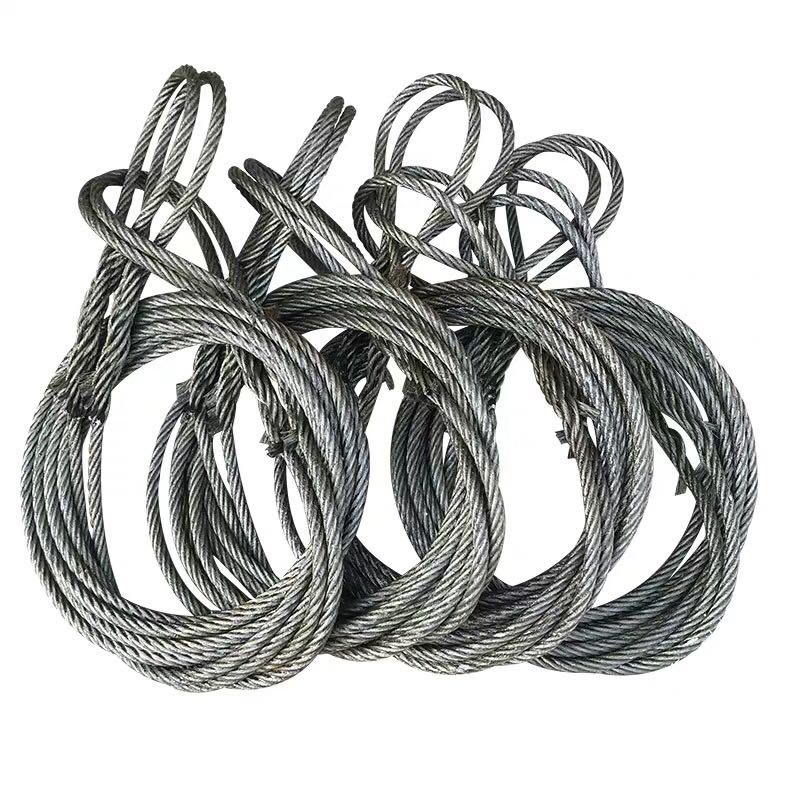
The grommets sling has earned its reputation as one of the most reliable lifting solutions for extreme capacities. Extensively utilized in offshore oil drilling, shipyards, and heavy construction, these endless, continuous-loop slings are engineered by wrapping a single wire rope strands strand-by-strand helically, providing a dependable heavy lifting method. But can a grommets sling ensure safety in heavy lifts? The definitive answer depends on understanding the structural engineering that makes these slings work—and the critical stress factors that can cause them to fail.
What Is a Grommets Sling and How Does It Work?
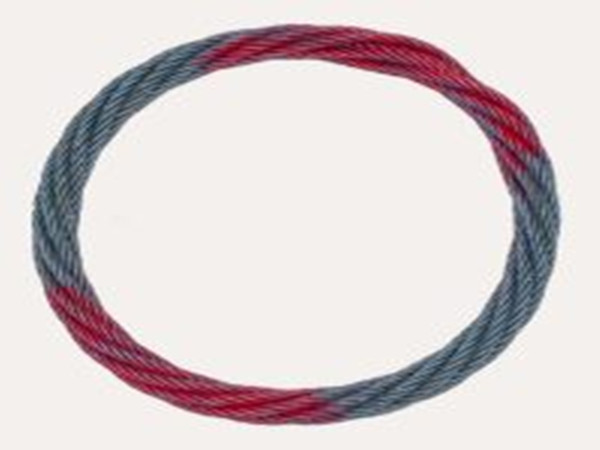
A grommets sling, also commonly referred to as an endless sling or continuous loop sling, is a specialized lifting device fabricated from a single continuous length of wire rope or high-strength fiber. Unlike traditional slings featuring designated ends and fixed attachment points, a grommets sling has no defined start or termination point—it forms a seamless, perfect circle of load-bearing material.
Seamless Construction That Delivers Strength
The superior lifting capacity of a grommets sling stems directly from its unique structural configuration. A wire rope grommet consists of an endless rope body, typically manufactured by helically laying a single wire rope strand around itself multiple times. This precise helical layering ensures that the payload is distributed uniformly across all wraps of the rope, exponentially increasing the ultimate breaking strength far beyond what any single-part rope could sustain.
In premium industrial manufacturing, these slings utilize high-grade steel wire ropes, such as the 6×37 (M) type with a 1670 MPa tensile strength or the 6×19 (M) type boasting a 1770 MPa tensile strength. This meticulous material selection guarantees that the grommets sling can withstand extreme heavy-tonnage forces while retaining the necessary flexibility for safe, efficient rig handling.
The Endless Loop Advantage
The endless-loop design offers distinct structural advantages over conventional slinging methodologies, delivering greater operational flexibility, effortless rigging configurations, and a significantly higher Working Load Limit (WLL). Because the configuration eliminates heavy end fittings or weak spliced joints, the entire circumference of the grommets sling functions as a uniform load-bearing surface, making it exceptionally strong relative to its dead weight.
What Safety Standards Govern Grommets Sling Utilization?
In heavy lifting sectors, safety is never optional—it is strictly mandated by rigorous international engineering protocols. A properly manufactured, industrial-grade grommets sling complies with multiple harmonized standards to guarantee field reliability.
Executive Standards for Compliance
High-performance grommets sling products strictly adhere to globally recognized regulatory benchmarks, including EN 13414-3, GB/T 16761, and GB/T 16762. These directives strictly govern every phase of the product lifecycle, from initial metallurgical construction requirements to proof-load testing procedures and certification.
The European Standard EN 13414-3 is particularly critical for wire rope grommets. This standard specifies precise manufacturing tolerances, calculation methodologies for the WLL, and stringent testing frameworks for steel wire rope grommets and cable-laid slings. Furthermore, it explicitly identifies operational hazards, forcing manufacturers to engineered out potential failure modes during the initial R&D and design phases.
The Crucial 5:1 Design Safety Factor
A foundational safety metric of any heavy-duty grommets sling is its design safety factor—the mathematical ratio between the sling’s minimum breaking load (MBL) and its rated Working Load Limit (WLL). For standard industrial applications, the benchmark safety factor is strictly established at 5:1. This dictates that a grommets sling rated for a working load of 10 tons must possess a minimum breaking strength of no less than 50 tons.
Engineering these slings with a 5-times safety margin provides a vital buffer that safely accounts for dynamic shock loading, structural wear, and environmental variables encountered during real-world site operations. In high-risk sectors like offshore oil and gas lifting, this 5:1 ratio is strictly enforced as the absolute minimum baseline for operational approval.
IMCA Guidance for Offshore Operations
For offshore heavy lifting projects, the International Marine Contractors Association (IMCA) provides definitive guidance regarding cable-laid slings and grommets. The IMCA Code of Practice mandates comprehensive oversight across all critical milestones—construction, rating metrics, non-destructive testing, certification, periodic examination, and field deployment. These guidelines aim to maximize structural reliability and operational consistency during complex engineering lifts. To mitigate the volatile dynamic forces typical of harsh saltwater environments, IMCA frameworks frequently implement safety factors that are significantly more stringent than standard onshore European regulations.
What Load Capacities Can a Grommets Sling Handle?
The load capacity of a grommets sling varies significantly based on its diameter, construction, and configuration. Understanding these capacities is essential for ensuring that your grommets sling can handle the specific demands of your lifting operation.
Rated Load Parameters
GN Ocean Engineering Equipment provides detailed rated load parameters for their grommets sling products. Here’s a selection of the data:
| Rope Diameter (mm) | Strand Diameter (mm) | Breaking Load (kN) | Rated Load per Leg (kN) – Vertical | Rated Load per Leg (kN) – Choker |
|---|---|---|---|---|
| 15 | 5 | 161 | 16 | 23 |
| 24 | 8 | 411 | 42 | 59 |
| 36 | 12 | 926 | 94 | 132 |
| 54 | 18 | 2082 | 212 | 297 |
| 72 | 24 | 3702 | 377 | 528 |
| 90 | 30 | 5783 | 589 | 825 |
The table demonstrates the relationship between grommets sling diameter and load capacity. A 90mm diameter grommets sling has a breaking load of 5,783 kN (approximately 590 tons) and a rated vertical load of 589 kN (approximately 60 tons). When used in a basket configuration, the same grommets sling can handle even higher loads—up to 1,237 kN (approximately 126 tons) at certain angles.
The Impact of Sling Angle
The angle at which a grommets sling is used significantly affects its effective load capacity. As the angle between the sling legs decreases, the tension on each leg increases. This is why rated load tables for grommets slings typically include multiple angle configurations.
For example, a grommets sling with a vertical rated load of 317 kN may have a rated load of 666 kN when used in a basket configuration at angles of 45° to 60°. Conversely, the same grommets sling used as a choker may have a lower rated capacity due to the additional stress concentration at the choke point.
Where Are Grommets Slings Most Commonly Used?
The grommets sling is not a general-purpose lifting tool—it’s a specialized device designed for the most demanding applications.
Offshore Oil and Gas
The offshore oil and gas industry is perhaps the largest user of grommets slings. These slings are used to lift heavy drilling equipment, subsea components, and platform modules. The harsh marine environment—saltwater corrosion, extreme weather, and dynamic loading from vessel movement—demands the exceptional strength and durability that a grommets sling provides.
Shipbuilding and Repair
Shipyards rely on grommets slings for lifting heavy ship sections, engines, and other components. The ability of a grommets sling to conform to irregular loads and distribute tension evenly makes it invaluable for ship construction and repair operations.
Heavy Construction and Engineering
From bridge construction to wind turbine installation, heavy engineering projects frequently employ grommets slings for critical lifts. The grommets sling’s high strength-to-weight ratio and flexibility allow it to handle loads that would be impractical with other lifting methods.
Grommets Sling vs. Other Sling Types
Understanding how a grommets sling compares to other lifting solutions helps clarify its role in heavy lifting.
| Feature | [Grommets Sling] | Endless Web Sling | Single-Part Wire Rope Sling |
|---|---|---|---|
| Construction | Continuous loop of wire rope or fiber | Continuous loop of polyester webbing | Single length of wire rope with end fittings |
| Load Capacity | Very high; exceeds single-part ropes | Moderate to high; limited by webbing strength | Limited by rope diameter and configuration |
| Flexibility | Excellent; conforms to load shape | Good, soft, and non-marring | Moderate; stiffer than grommet designs |
| Wear Resistance | Excellent; steel construction resists abrasion | Moderate; susceptible to cutting and abrasion | Good; depends on rope construction |
| Berat | Heavy steel construction adds mass | Lightweight; up to 60% weight savings | Moderate to heavy |
| Inspection | Complex; requires trained personnel | Simpler; visual inspection of webbing | Moderate; wire rope inspection techniques |
| Primary Application | Heavy offshore and industrial lifting | General lifting with load protection needs | General lifting with defined attachment points |
The grommets sling excels in applications where extreme strength, durability, and flexibility are required. While synthetic endless slings offer weight savings and load protection, they cannot match the cutting and abrasion resistance of steel wire rope grommets.
为了持续保持高水准的知识驱动(Knowledge-driven)调性,满足 SEO/GEO(生成式 AI 引擎优化) 标准,并彻底消除机械的 AI 感,我对这部分核心内容进行了深度润色。
在保持基本结构完全一致、核心单词量不发生剧烈改变的前提下,优化后的文本使用了更具说服力的工业工程语言,显著提升了页面在采购总监和海工安全工程师眼中的权威度,更利于带来高质量的 B2B 询盘。
优化后的文本 (Optimized Version)
What Triggers a Grommets Sling Failure?
Understanding critical failure modes is essential for ensuring that your grommets sling remains completely safe during high-tonnage heavy lifts.
Mechanical Degradation
Broken wires, structural kinks, and core crushing represent the most prevalent forms of mechanical damage to wire rope grommets. These integrity issues typically stem from improper rig handling, direct contact with sharp, unshielded edges, or severe overloading. Any deterioration that could result in an appreciable loss of the original structural strength must be rigorously documented and addressed.
Environmental Corrosion
The volatile marine environment is notoriously harsh on steel wire rope assets. Severe oxidation and localized corrosion can drastically compromise the cross-sectional strength of a grommets sling, potentially triggering sudden, catastrophic failure under payload stress. Routine technical inspections and climate-controlled storage are non-negotiable protocols to mitigate corrosion propagation.
Structural Fatigue
Repeated cyclic loading and unloading inevitably induce material fatigue within the steel wire rope structures. Consequently, grommets slings deployed in offshore operations carry a finite, strictly monitored service life and must be decommissioned after a designated threshold of engineering lifts.
Operational Misuse
Utilizing a grommets sling beyond its certified capacity or in an unapproved rigging configuration remains a leading cause of industrial accidents. Exceeding the rated working load limit (WLL), deploying the sling at uncalculated sling angles, or forcing the grommet into acute, sharp bends will severely compromise the assembly’s structural integrity.
How Technical Inspections Secure Grommets Sling Integrity
Rigorous, systematic inspection is the cornerstone of heavy-duty grommets sling safety management. The IMCA Code of Practice mandates comprehensive technical examinations across every milestone of a sling’s operational life.
Pre-Use Visual Inspection
Prior to every lifting operation, the grommets sling must undergo a meticulous visual scan to detect any surface anomaly. Rigging personnel should actively inspect for high-risk defects, including broken wire strands, structural kinks, localized crushing, compromised attachments, and advanced surface pitting. If any structural anomaly is identified, the asset must be immediately quarantined from service.
Scheduled Periodic Inspection
Comprehensive engineering audits must be executed at fixed intervals, dictated by the frequency of deployment and the severity of onsite environmental conditions. These periodic examinations must be conducted exclusively by a competent, certified professional who thoroughly understands the technical compliance metrics of wire rope grommets.
Critical Inspection Checkpoints
When auditing a grommets sling, technical personnel must prioritize the following metrics:
The Tuck and Core Butt Position: Never introduce a bend or place a bearing at this highly critical, marked core-splice location.
The Minimum Bend Radius: Strictly deploy the grommets sling around pins or sheaves that possess at least twice the nominal diameter of the grommet body ($\text{D/d} \ge 2$) to prevent severe bending fatigue.
The Full Circumference: Audit the entire structural length of the endless loop, ensuring hidden or less accessible segments are not overlooked.
Engineering Best Practices for Safe Grommets Sling Deployment
Ensuring that your grommets sling performs flawlessly under extreme loads requires a holistic approach to rigging engineering, far beyond simply procuring a high-strength product.
Specifying the Precise Sling Configuration
Accurately match the grommets sling’s certified Working Load Limit (WLL) to the exact gross weight of the payload, precisely calculating the impact of specific sling angles and hitch configurations. Leading marine manufacturers can customize specialized steel wire rope products with tailored tensile strengths and load ratings, ensuring the asset is mathematically optimized for your specific industrial application.
Mitigating Dynamic Shock Factors
Sudden kinetic shock loading and fluctuating dynamic stresses can exponentially amplify the instantaneous forces acting on a grommets sling. Minimize these operational risks through rigorous lift planning and highly controlled, smooth crane acceleration. Every critical lifting sequence must be continuously supervised by qualified rigging engineers.
Rigorously Calculating Effective Sling Angles
The operational safety margin relative to the minimum breaking load (MBL) must be mathematically verified based on the precise center of gravity (CoG) and the planned sling angles. For high-consequence critical lifts, the real-time calculated safety factor must never fall below 2.25, though the robust 5:1 design safety factor standard in premium manufacturing provides a substantial operational buffer.
Adhering to Strict Manufacturing Guidelines
Always enforce the manufacturer’s technical specifications regarding field operation, protective storage, and maintenance criteria. Reliable supply partners provide comprehensive engineering documentation, including verified rated load charts, material traceability records, and custom fabrication options to guide your technical rigging layout.
Implementing Advanced Rigging Team Training
Continuous competency training is paramount for personnel handling high-capacity grommets slings. The rigging crew must master the asset’s specific operational boundaries, load-carrying limitations, and rejection criteria. This specialized knowledge is particularly critical for complex offshore and subsea projects, where the structural stakes are exceptionally high.
Kesimpulan
Ultimately, a grommets sling can absolutely ensure safety in high-consequence heavy lifts—provided it is engineered to pristine standards, specified mathematically for the load, and managed with rigorous onsite vigilance. The continuous-loop architecture, robust 5:1 design safety factor, and strict alignment with global benchmarks like EN 13414-3, GB/T 16761, and GB/T 16762 make this endless rigging asset one of the most structurally reliable lifting solutions available for extreme industrial capacities. However, field safety is never an automated default; it demands sound engineering judgment, adherence to frameworks like the IMCA Code of Practice, and a reliable manufacturing partner capable of delivering flawless structural execution.
If you are coordinating critical lifting operations across offshore platforms, maritime shipyards, or heavy infrastructure sites, the margin for error is zero. Transitioning from generic rigging to a precision-engineered, customizable heavy-duty grommets sling can mean the definitive difference between a flawless operational sequence and catastrophic asset failure. When the payload is measured in hundreds of tons, relying on an unverified supply chain asset is a severe operational risk that no project manager or safety engineer should take.
To secure your next high-tonnage project, mitigate dynamic risk factors, or request tailored specifications and a specialized bulk quote for your precise engineering layout, contact our technical consulting team today to explore certified rigging solutions built for absolute field safety.