

Einführung
Every lifting operation depends on reliable and safe rigging equipment. When a sling fails, the consequences can include damaged loads, unexpected downtime, and serious safety risks. For marine engineering, construction, and heavy industrial projects, choosing the right lifting solution is critical.
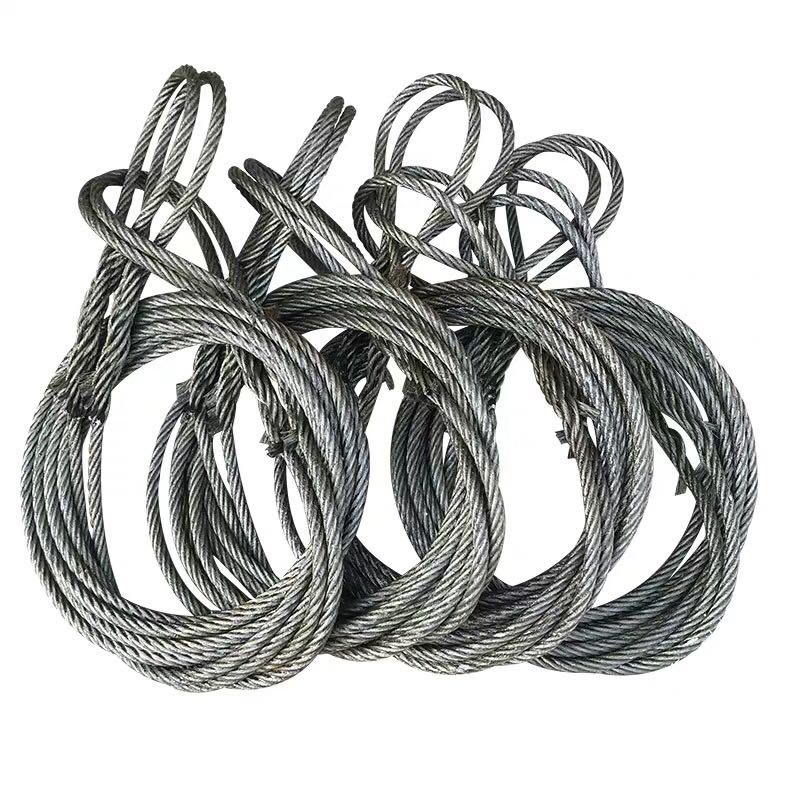
Gegossene Stahldrahtseilschlingen are designed to handle demanding lifting conditions where strength, durability, and reliability are essential. But what challenges can they solve compared with other sling options?
This guide explores how cast steel wire rope slings help improve lifting safety, load handling, service life, and performance in challenging environments.
How Do Cast Steel Wire Rope Slings Handle Heavy Loads and Harsh Conditions?
The performance of any lifting operation depends on whether the sling can safely handle the required load. Choosing a sling with insufficient capacity increases safety risks, while an oversized option can add unnecessary weight and cost.
High Strength for Heavy-Duty Lifting Applications
Cast steel wire rope slings are designed to provide high load capacity while maintaining a practical size and weight. Depending on the rope diameter and construction, these slings can support rated loads from approximately 0.4 tons for smaller sizes to more than 20 tons for larger configurations.
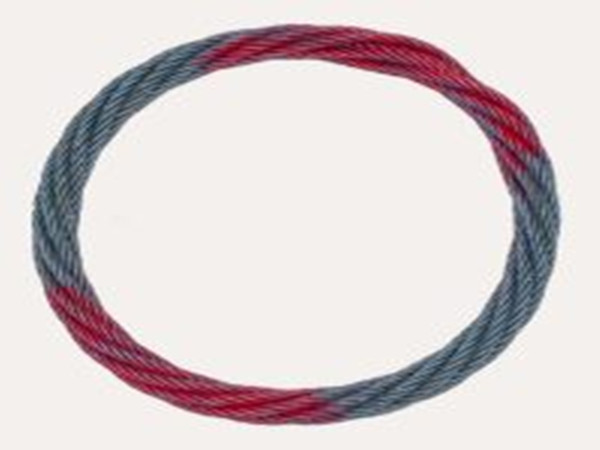
Their strength comes from the quality of the wire rope construction. Common options include 6×37 (M) wire rope with a 1670 MPa tensile strength and 6×19 (M) wire rope with a 1770 MPa tensile strength. The 6×19 construction, featuring six strands of 19 wires each, provides a good balance of strength, flexibility, and abrasion resistance, making it suitable for demanding lifting applications.
Reducing Rigging Complexity on the Job Site
For heavy lifting projects, using the right sling can simplify rigging operations. A cast steel wire rope sling can handle loads that may otherwise require multiple lower-capacity slings or heavier chain assemblies. This is especially valuable for lifting structural steel, precast concrete components, and marine equipment.
Compared with chain slings, wire rope slings offer a better balance between strength and handling efficiency. Compared with synthetic slings, they provide higher resistance to abrasion and heavier load capacity. This combination makes cast steel wire rope slings a reliable choice for applications where both performance and practicality matter.
How Do Cast Steel Wire Rope Slings Perform in Harsh Environments?
Lifting operations often take place in challenging conditions, including construction sites, offshore locations, and industrial facilities exposed to abrasion, corrosion, heat, and mechanical stress.
Resistance to Abrasion and Mechanical Wear
Abrasion is a common factor affecting sling service life. Due to their steel wire construction, cast steel wire rope slings can better withstand contact with rough surfaces and sharp-edged loads compared with many synthetic alternatives.
For applications involving steel structures, heavy machinery, or frequent lifting cycles, this durability helps reduce premature wear and supports more reliable operation.
Protection Against Corrosion and Temperature Changes
Marine and offshore environments create additional challenges due to saltwater exposure and high humidity. Galvanized wire rope options and protective treatments can improve corrosion resistance, helping extend service life in demanding conditions.
Wire rope slings also maintain their mechanical performance better than synthetic slings in elevated temperature applications. This makes them suitable for industrial environments involving heat exposure, outdoor operations, and other demanding working conditions.
How Do Cast Steel Wire Rope Slings Solve the Safety and Reliability Problem?
Safety isn’t just about strength—it’s about predictability. A sling that fails without warning is far more dangerous than one that shows signs of distress before reaching its limit.
Built to Standards That Ensure Predictable Performance
Cast steel wire rope slings are manufactured to rigorous standards that ensure consistent, predictable performance. EN13411-3, GB/T16761, and GB/T16762 are the key standards governing these products. Compliance with these standards means the slings have been designed, manufactured, and tested to meet specific safety and performance requirements.
The safety factor is a critical metric. These slings are manufactured with a 5:1 safety factor, meaning the breaking strength is five times the working load limit. This is the industry-standard safety factor for wire rope slings and provides a substantial margin against unexpected overloads.
Termination Method: Full Strength, No Derating
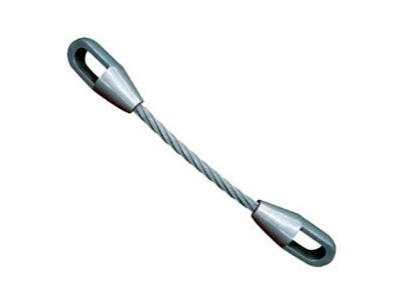
But safety also comes from the termination method. The cast socket termination—where the wire rope ends are secured in a cast steel fitting—provides a secure, reliable connection that maintains the rope’s full strength. Alternative termination methods like wire rope clips can require derating the sling to 80% of the rope’s rated capacity to account for inefficiency. Cast socket terminations eliminate this derating, delivering the full strength of the wire rope.
The predictability extends to inspection. Wire rope slings show visible signs of wear and damage—broken wires, kinks, crushing, corrosion—that can be detected during routine inspections. This allows operators to identify problems before they become failures, solving the “hidden failure” problem that plagues some other sling types.
What Problems Do Cast Steel Wire Rope Slings Solve with Durability and Long Service Life?
Every rigging operation faces the same economic reality: slings are an expense, and replacing them costs money. The longer a sling lasts, the lower the total cost of ownership.
Resisting Fatigue and Abrasion Over Time
Cast steel wire rope slings solve the durability problem through a combination of material strength, construction quality, and design features that resist the forces that cause wear. The steel wire rope construction—particularly the 6×19 configuration used in many cast steel slings—is inherently resistant to the abrasion and fatigue that shorten the life of other sling types.
Fatigue is a particular concern. Every time a sling is bent around a hook or a load, the wires experience stress. Over time, this repeated bending can cause metal fatigue and eventual wire breakage. The design of the wire rope—with multiple strands and wires sharing the load—distributes this stress and extends the fatigue life.
Termination Design That Extends Service Life
The cast socket termination also contributes to durability. Unlike mechanical terminations that can work loose over time or create stress points where the rope enters the fitting, a cast socket provides a smooth, gradual transition that reduces stress concentration. This means fewer weak points and longer service life.
For operations that use slings daily, this durability translates directly to lower replacement costs and less downtime for inspection and replacement.
What Problems Do Cast Steel Wire Rope Slings Solve with Versatility and Configuration?
No two lifts are identical. Loads come in different shapes, sizes, and weights. Lifting points vary. Clearances change. A sling that can only be used in one configuration is a limitation.
Multiple Hitch Options for Different Load Geometries
Cast steel wire rope slings solve this problem through their inherent versatility. They can be used in vertical, choker, and basket hitches, adapting to different load geometries and lifting requirements. The wire rope construction provides flexibility that allows the sling to conform to the load, while the steel construction provides the strength to handle heavy weights.
The cast termination also enables versatility. The eye size—both length and width—can be customized to customer requirements. This means the sling can be configured with eyes that fit specific shackles, hooks, or other rigging hardware.
Multi-Leg Configurations for Complex Lifts
Multi-leg configurations further extend the versatility. Master-link four-leg slings distribute the load across multiple legs, providing stability for large or awkward loads. The cast steel terminations ensure that each leg contributes its full strength to the lift.
This versatility solves a practical problem: the need to maintain an inventory of different slings for different lifts. With cast steel wire rope slings, a smaller number of versatile slings can handle a wider range of tasks.
Cast Steel Wire Rope Slings vs. Other Sling Types: Which Problems Does Each Solve?
Understanding the problems cast steel wire rope slings solve becomes clearer when compared to alternative sling types.
Wire rope slings vs. chain slings. Chain slings offer very high lifting capacity but are less flexible and significantly heavier. Wire rope slings solve the weight and handling problem while still delivering substantial strength. They are also generally more cost-effective, particularly for longer slings.
Wire rope slings vs. synthetic slings. Synthetic slings are lighter and more flexible but have more limited load capacity and are vulnerable to cutting, abrasion, and UV degradation. Wire rope slings solve the durability problem, standing up to abrasive surfaces and harsh environments that would destroy synthetics.
Cast termination vs. mechanical termination. Mechanical terminations like wire rope clips and pressed aluminium sleeves can create weak points and require derating. Cast socket terminations solve the termination efficiency problem, delivering the full strength of the wire rope without compromise.
The choice ultimately depends on the specific problems that need solving. For heavy loads, abrasive environments, and applications where reliability is paramount, cast steel wire rope slings consistently deliver.
Cast Steel Wire Rope Sling Capacity by Diameter
| Drahtseildurchmesser (mm) | Rated Load Range (Tons) | Rated Breaking Load (Tons) | Typical Applications |
|---|---|---|---|
| 6–7 | 0.4–0.6 | 2–3 | Light industrial, small components |
| 8–10 | 0.8–1.2 | 4 | General workshop lifting |
| 11–13 | 1.4–2.0 | 7–10 | Medium machinery, structural steel |
| 14–16 | 2.3–3.0 | 12–15 | Heavy equipment, precast concrete |
| 18 | 3.9 | 19–20 | Construction, marine components |
| 22 | 4.8–5.8 | 24–29 | Industrial plant maintenance |
| 24–26 | 6.9–8.0 | 34–40 | Heavy structural lifts |
| 28–30 | 9.3–10.7 | 47–54 | Large-scale construction |
| 32–35 | 12.2–14.6 | 61–73 | Marine and offshore operations |
| 38 | 17 | 86 | Heavy marine lifts |
| 40–42 | 19–21 | 95–105 | Extreme heavy lifting |
| 44–48 | 23–27 | 115–137 | Ultra-heavy industrial lifts |
| 50–54 | Up to 27 | Up to 137 | Maximum capacity applications |
Source: Product specifications based on wire rope 6×37 (M) type 1670 MPa and 6×19 (M) type 1770 MPa
How Do Cast Steel Wire Rope Slings Solve the Compliance and Standards Problem?
Regulatory compliance is a problem that every lifting operation must address. Using slings that don’t meet recognized standards creates liability, invites regulatory scrutiny, and puts workers at risk.
Meeting International and National Standards
Cast steel wire rope slings solve this problem by being manufactured to established international and national standards. EN13411-3 is the European standard for steel wire rope slings with cast sockets. GB/T16761 and GB/T16762 are the Chinese equivalents, covering general-purpose wire rope slings. Compliance with these standards provides assurance that the slings have been designed, manufactured, and tested to meet specific safety and performance requirements.
The standards cover everything from material specifications and manufacturing processes to testing procedures and marking requirements. This comprehensive approach ensures that a compliant sling delivers predictable, reliable performance.
Simplifying Procurement and Legal Protection
For operators, using standards-compliant slings solves several problems at once. It simplifies procurement by providing clear specifications. It facilitates inspection and maintenance by establishing clear criteria. It supports regulatory compliance by documenting that the equipment meets recognized standards. And it provides legal protection by demonstrating that reasonable care was taken in equipment selection.
The table below compares the key standards applicable to cast steel wire rope slings.
Key Standards for Cast Steel Wire Rope Slings
| Standard | Scope | Key Requirements |
|---|---|---|
| EN13411-3 | Steel wire rope slings with cast sockets | Design, manufacturing, testing, and marking requirements for cast socket terminations |
| GB/T16761 | General-purpose wire rope slings | Technical specifications for single-leg and multi-leg sling assemblies |
| GB/T16762 | General-purpose wire rope slings—Characteristics and conditions | Detailed technical requirements, including ordering, inspection, and quality documentation |
| ASME B30.9 | Slings (U.S. standard) | Design factor of 5 for rated capacities of wire rope slings |
| ISO 2408 | Steel wire ropes for general purposes | Minimum requirements for stranded steel wire ropes used in lifting equipment |
What Problems Do Cast Steel Wire Rope Slings Solve in Marine and Offshore Operations?
Marine and offshore operations present some of the most demanding lifting conditions anywhere. Saltwater corrosion, heavy seas, tight spaces, and extreme loads combine to create a challenging environment.
Corrosion Resistance and High Load Capacity
Cast steel wire rope slings solve several specific problems in this environment. Corrosion resistance is addressed through galvanized steel wire rope options that significantly enhance anti-rust capability. The durable construction withstands the abrasive conditions found on vessels and offshore platforms.
The high load capacity solves the problem of lifting heavy marine equipment. The specifications show cast steel wire rope slings handling loads up to 27 tons with breaking strengths exceeding 100 tons. This capacity is essential for lifting engines, deck equipment, and structural components.
Reliability in Dynamic, Confined Spaces
The reliability of cast socket terminations solves the problem of termination failure in a safety-critical environment. Unlike mechanical terminations that can loosen or fail, cast sockets provide a permanent, secure connection that maintains its integrity even under the dynamic loads common in marine operations.
The versatility of wire rope slings—their ability to be used in vertical, choker, and basket hitches—solves the problem of adapting to different load geometries in confined spaces. On a vessel or platform, space is often limited, and the ability to configure the sling to fit the situation is essential.
How Do Cast Steel Wire Rope Slings Solve the Selection and Sourcing Problem?
Procurement professionals face a different set of problems: finding the right product, ensuring quality, and managing cost. Cast steel wire rope slings solve these problems through clear specifications and customization options.
Clear Specifications for Confident Selection
The availability of multiple wire rope constructions—6×37 (M) type at 1670 MPa and 6×19 (M) type at 1770 MPa—provides options for different applications. The ability to customize rope strength and load capacity solves the problem of matching the sling to specific requirements. The ability to customize eye sizes solves the problem of fitting the sling to existing rigging hardware.
The clear specifications and standards compliance solve the problem of quality assurance. When a sling meets EN13411-3 or GB/T16762, the buyer knows what they are getting. This reduces the risk of receiving substandard products and simplifies the evaluation of competing suppliers.
Data-Driven Capacity Verification
The data-driven specifications—with clear rated loads and breaking loads for each diameter—solve the problem of capacity verification. Design engineers can reference these numbers directly, eliminating guesswork and reducing the risk of underspecification.
What Benefits Do Cast Steel Wire Rope Slings Provide for Lifting Operations?
Across different lifting applications, cast steel wire rope slings address several key requirements that affect safety, efficiency, and long-term performance.
- High load capacity: They provide the strength needed for heavy lifting tasks while maintaining a practical design for handling and rigging.
- Long service life: Their steel construction helps resist abrasion, fatigue, and harsh working conditions, reducing premature replacement.
- Reliable lifting performance: With proper design, inspection, and safety factors, they support predictable performance in demanding operations.
- Flexible configurations: Different hitch options, rope constructions, and customized specifications allow them to adapt to various lifting requirements.
- Standards compliance: Manufactured according to recognized industry standards, they help companies meet safety and quality requirements during procurement and operation.
For construction, marine engineering, offshore, and heavy industrial applications, choosing the right cast steel wire rope sling can improve lifting efficiency, reduce downtime, and support safer operations.
Need a Cast Steel Wire Rope Sling for Your Project?
Selecting the right sling depends on factors such as load capacity, working environment, lifting method, and required standards. Contact Jien Marine to discuss your application requirements and find a cast steel wire rope sling solution designed for your specific lifting needs.