

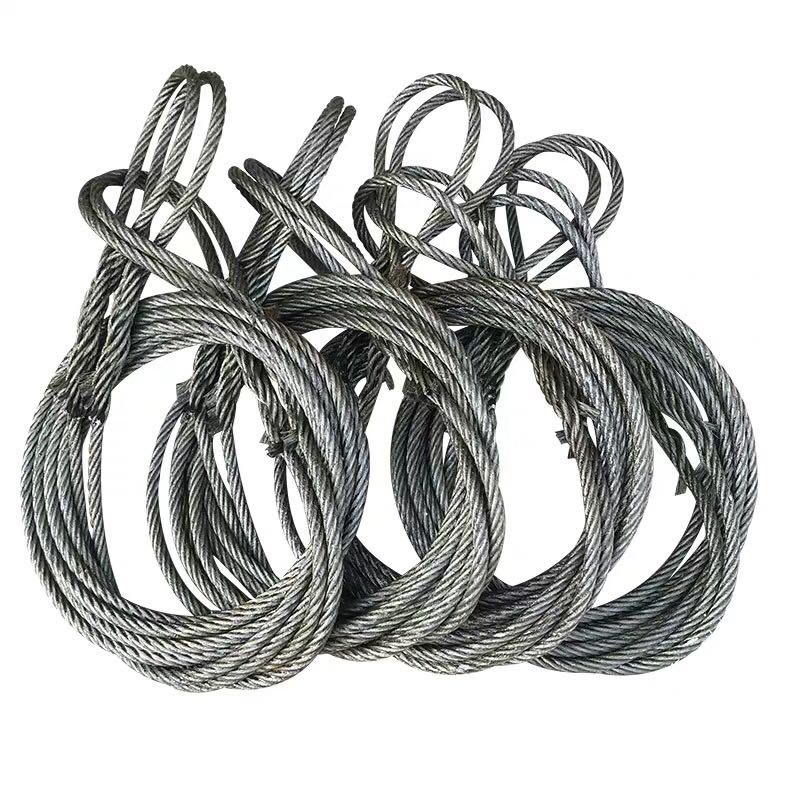
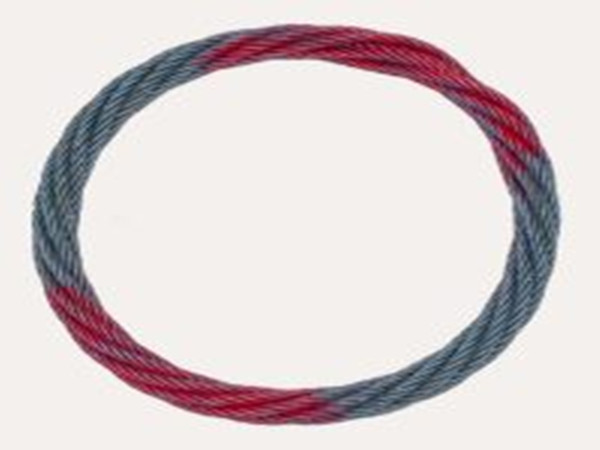
A wire rope sling is a lifting device made from high-strength steel wire rope that connects heavy loads with cranes, hoists, and other lifting equipment. As a professional wire rope sling manufacturer, we provide customized lifting solutions for construction, manufacturing, marine, shipbuilding, and heavy industrial applications.
Choosing the right wire rope sling depends on the load, sling configuration, working environment, and required capacity. Regular inspection is also essential, and any sling showing damage, excessive wear, or structural defects should be removed from service immediately.
What Is a Wire Rope Sling?
Unlike a standard length of wire rope, a wire rope sling is specifically engineered for lifting operations and can be customized with different end fittings, terminations, and configurations to suit various load requirements.
This lifting assembly is manufactured by twisting individual steel wires into strands and then forming those strands around a core to create a strong and flexible rope structure. Depending on the lifting application, slings can be designed in different configurations, including single-leg, multi-leg, endless, and grommet types.
In industrial lifting operations, wire rope slings provide a reliable connection between lifting equipment and cargo while offering a balance of strength, flexibility, durability, and abrasion resistance. They are commonly selected for applications where heavy loads, demanding environments, and repeated lifting cycles require dependable performance.
What Are Wire Rope Slings Used For?
Construction:
Wire rope slings are widely used for lifting structural steel, reinforcement bars, pipes, precast concrete components, formwork, and heavy construction materials during building, installation, and demolition projects.
Manufacturing:
In manufacturing facilities, wire rope slings help move industrial machinery, engines, production equipment, pressure vessels, and fabricated metal assemblies during installation, maintenance, and internal material handling.
Marine and Shipbuilding:
Marine industries rely on wire rope slings for handling hull sections, deck modules, propulsion systems, marine piping, offshore structures, and other oversized components during vessel construction, repair, and offshore operations.
Heavy Equipment Handling:
Wire rope slings are commonly used to lift generators, compressors, diesel engines, construction equipment, and other heavy machinery during transportation, installation, and relocation tasks.
How Does a Wire Rope Sling Work?
This lifting device works by combining the strength of twisted steel wire construction with flexible lifting capability, allowing heavy loads to be safely connected and moved by cranes, hoists, and other lifting equipment. Its performance depends on three key factors: rope structure, load transfer, and condition monitoring.
Structural Principle
The sling structure is manufactured by twisting individual steel wires into multiple strands, which are then helically arranged around a central core. This multi-layer structure provides high tensile strength while maintaining the flexibility needed for lifting irregularly shaped loads.
During operation, the rope structure allows the sling to adapt to different load surfaces while distributing stress across multiple wire strands. End fittings such as ferrules, thimbles, hooks, or other terminations secure the rope ends, reduce strand movement, and help maintain stability during repeated lifting cycles.
Force Transfer During Lifting
When a load is lifted, force is transferred from the crane or hoist through the sling fittings, rope strands, and connection points before reaching the load. The actual working capacity depends on the lifting configuration and hitch method.
- A vertical hitch applies the sling’s rated capacity directly.
- A choker hitch reduces lifting capacity because the rope experiences additional bending, friction, and compression.
- A basket hitch distributes the load across two supporting sections of the sling and can provide increased lifting efficiency when properly configured.
For multi-leg wire rope slings, sling angle is a critical consideration. As the angle between sling legs decreases, the tension on each individual leg increases significantly. Proper load calculation is required to prevent overloading and ensure safe lifting operations.
Damage and Failure Mechanism
Although wire rope slings are designed for demanding lifting environments, their internal structure can weaken when exposed to excessive wear or improper use. Common damage signs include broken wires, kinking, crushing, bird caging, corrosion, and damaged fittings.
These defects can disrupt the balance of forces within the rope structure, creating localized stress concentration and increasing the risk of sudden failure. These defects can reduce sling performance and increase the risk of failure during lifting operations.
What Are the Main Types of Wire Rope Slings?
Lifting slings are available in several configurations designed for different lifting requirements, load shapes, and rigging conditions. Professional manufacturers can provide custom wire rope sling solutions with different lengths, diameters, end fittings, and configurations.
Single-Leg Wire Rope Sling
A single-leg wire rope sling consists of one rope section with end fittings attached at both ends. It is commonly used for simple vertical lifting applications where the load has a suitable lifting point and does not require multiple connection points.
This type of sling is often selected for straightforward lifting tasks because of its simple structure, easy installation, and reliable performance in general material handling operations.
Multi-Leg Wire Rope Sling
A multi-leg wire rope sling uses two, three, or four rope legs connected to a master link or fitting assembly to support larger or irregularly shaped loads. It provides multiple lifting points, improving load stability during complex lifting operations.
However, load distribution between sling legs is not always equal. Factors such as sling angle, load balance, and lifting geometry must be carefully considered to prevent excessive tension on individual legs.
Endless Wire Rope Sling
An endless wire rope sling, also known as a continuous-loop sling, is manufactured as a closed loop without traditional end fittings. Its flexible design allows different hitch configurations, including vertical, choker, and basket hitches.
Because it can be repositioned easily around different load shapes, endless slings are commonly used in applications requiring versatile rigging solutions.
Szelkowy wieszak z oczkiem
A grommet sling is a continuous wire rope loop manufactured by forming a seamless circular structure. Compared with standard endless slings, grommet slings are designed for heavy-duty lifting applications that require high strength, compact construction, and smaller bending radii.
They are commonly used in demanding industrial lifting operations where large loads, limited space, and high load capacity are key considerations.
How Do You Choose the Right Wire Rope Sling?
Selecting the correct wire rope sling requires evaluating the lifting application, load characteristics, operating environment, and required working capacity. The right sling should match the load requirements while maintaining safe performance throughout the lifting process.
1. Consider the Load Requirements
Start by identifying the load weight, shape, center of gravity, and lifting points. Heavy, oversized, or unevenly balanced loads may require specialized sling configurations, while compact and symmetrical loads may be suitable for simpler lifting arrangements.
Understanding the load characteristics helps determine the appropriate sling type, number of legs, and required capacity before lifting begins.
2. Choose the Appropriate Sling Type
Different wire rope sling types are designed for different lifting situations. Select from single-leg, multi-leg, endless, or grommet slings based on the load geometry, attachment points, and rigging requirements.
For example, multi-leg slings are often used for large or irregular loads requiring additional stability, while single-leg slings are suitable for simpler vertical lifting tasks.
3. Confirm the Lifting Configuration
The hitch method directly affects the working load limit (WLL) of a wire rope sling. Common lifting configurations include:
- Vertical hitch: Uses the sling in a straight-line lifting position and generally provides the rated capacity of the sling.
- Choker hitch: Wraps around the load and may reduce capacity due to increased bending, friction, and compression.
- Basket hitch: Supports the load with two sections of the sling and can provide higher capacity when properly configured.
Always check the manufacturer’s rated capacity information before lifting. Working with an experienced wire rope sling manufacturer ensures access to accurate specifications, reliable materials, and suitable lifting solutions.
4. Evaluate Sling Angle
For multi-leg wire rope slings, sling angle is a critical factor affecting load distribution. As the angle between sling legs decreases, the tension carried by each individual leg increases.
The actual lifting geometry should be calculated carefully to ensure that no single sling leg exceeds its allowable working load.
5. Analyze the Working Environment
The operating environment can significantly affect sling service life. Consider potential hazards such as:
- Sharp edges
- Abrasive surfaces
- Moisture and corrosion
- High temperatures
- Chemical exposure
When lifting loads with sharp corners or rough surfaces, appropriate edge protection should be used to prevent damage to the wire rope structure.
6. Verify End Fittings and Connections
Check that all fittings, including hooks, thimbles, shackles, and master links, are compatible with the lifting equipment and load requirements.
Before operation, ensure all connections are correctly installed, securely attached, and free from visible damage.
Wire Rope Sling Safety and Inspection
Choosing the correct wire rope sling is only the first step in safe lifting operations. Regular inspection and proper handling practices are essential to prevent failures and extend sling service life.
Before each use, inspect the sling for common warning signs, including:
- Broken wires
- Excessive abrasion
- Kinking or crushing
- Bird caging
- Corrosion
- Heat damage
- Deformed fittings
- Missing or unreadable identification markings
Any sling showing serious damage or defects should be immediately removed from service. Wire rope slings used in harsh environments or frequent lifting operations should also receive more frequent periodic inspections.
To maintain safe operation, avoid practices such as:
- Overloading the sling beyond its rated capacity
- Using damaged or uninspected slings
- Twisting or creating sharp bends in the rope
- Shortening slings with knots
- Dragging slings across abrasive surfaces
- Allowing direct contact with sharp edges without protection
- Standing under suspended loads
Safe lifting depends on selecting the appropriate wire rope sling, using it within its rated limits, and following proper inspection procedures throughout its service life.
Comparison of Wire Rope Slings and Other Lifting Slings
Multiple sling types are available for rigging operations, and the optimal selection hinges on load characteristics, surface protection needs, environmental hazards and project lifting requirements.
| Feature | Sznur liny | Synthetic Sling | Chain Sling |
| Strength | High | Application dependent | High |
| Flexibility | Good | Excellent | Moderate |
| Abrasion resistance | Good | Generally lower | High |
| Heavy-duty applications | Well suited | Application dependent | Well suited |
| Load surface protection | Moderate | Good | May require protection |
| Typical use | Heavy industrial lifting | General and surface-sensitive lifting | Heavy-duty lifting |
When is a wire rope sling a good choice?
Wire rope slings are preferred for rigging tasks that demand high tensile strength, long service durability, solid abrasion resistance and balanced flexibility. They perform reliably under rugged site conditions where synthetic slings are prone to cut damage. For finished or easily marred cargo requiring gentle contact, synthetic slings represent a more suitable alternative. The final sling selection must align with the actual load weight, lifting geometry and onsite operating environment.
Najczęściej zadawane pytania
Q1: What is a wire rope sling?
A wire rope sling is a lifting device made from wire rope and used to connect loads to a crane, hoist, or other lifting equipment. It is commonly used for heavy-duty lifting applications.
Q2: What are wire rope slings used for?
Wire rope slings are used to lift and position heavy loads in industries such as construction, manufacturing, marine operations, shipbuilding, and heavy equipment handling.
Q3: How does a wire rope sling work?
It distributes the load’s weight across the wire rope assembly and transfers lifting force between the hoisting equipment and the cargo. Proper hitch setup and balanced load sharing prevent overstress during hoisting.
Q4: How do I choose the right wire rope sling?
Consider the load weight and shape, sling configuration, lifting method, sling angle, working environment, end fittings, and rated capacity. The selected wire rope sling should match the load requirements and operating conditions.
Q5: What types of wire rope slings are available?
Common types include single-leg, multi-leg, endless, and grommet slings. The appropriate type depends on the load and lifting application.
Q6: Does the sling angle affect lifting capacity?
Yes. For multi-leg slings, the angle affects the forces carried by each sling leg. The applicable capacity should be determined based on the actual lifting configuration.
Q7: How should wire rope slings be inspected?
Inspect the sling before use for broken wires, abrasion, kinking, crushing, bird caging, corrosion, heat damage, and damaged fittings. Slings with significant defects should be removed from service.
Podsumowanie
A wire rope sling provides a reliable lifting solution for construction, manufacturing, marine, shipbuilding, and other heavy-duty applications. With different configurations available, each sling type is designed for specific load conditions, lifting methods, and working environments.
Proper selection and regular inspection are essential for safe and reliable lifting performance, and any sling showing significant damage should be removed from service immediately.
The best wire rope sling is not simply the strongest option — it is the one that matches the application and operates within its designed limits. For high-quality lifting solutions and professional support, contact our team to find the right wire rope sling for your specific requirements.