

Introductie
When it comes to heavy marine lifting, not all steel wire ropes are created equal. Round strand steel wire rope stands out by combining exceptional flexibility with superior bending fatigue resistance — qualities that compacted and triangular strand ropes cannot match. While some alternatives may offer higher breaking strength at the same diameter, they often fail under the constant stress of bending over sheaves thousands of times per day.
In shipboard cranes, offshore platform hoists, and cargo handling systems, bending fatigue is the leading cause of rope failure, far more than sudden overloads. Choosing a round strand ensures longer service life, lower maintenance costs, and safer operations. Don’t just focus on breaking load numbers — invest in a rope engineered to last the long haul.
What Is Round Strand Steel Wire Rope?
Let us start with a quick definition.
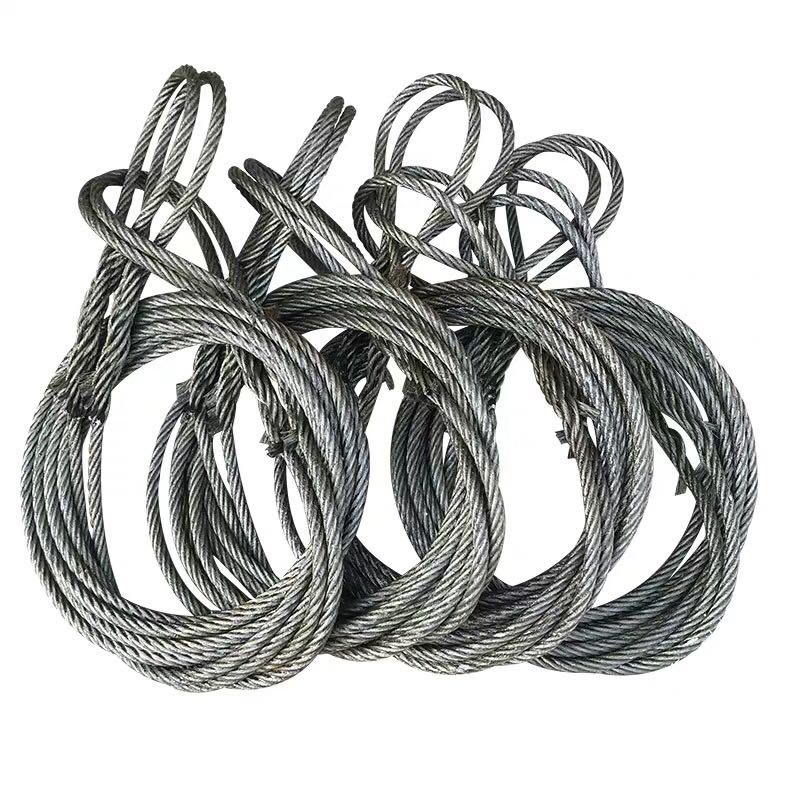
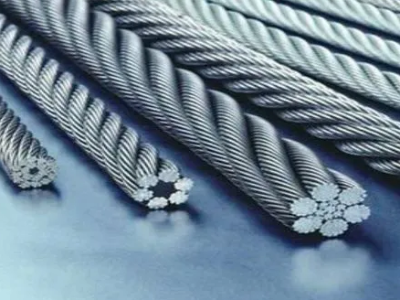
In round strand construction, multiple strands — each made of individual steel wires twisted together — are wound around a central core (fiber or steel). The strands themselves have a round cross-section. The 8×61 construction, for example, has eight strands, each containing 61 wires. The product page for GN Ocean’s 8×61M rope notes that this construction offers “good flexibility” and is “predominantly used for lifting and lashing where ease of handling is a key consideration.”
What makes round strand different is that the outer wires remain rounded. There are visible gaps between strands when you look at the rope cross-section. Those gaps are not a defect — they are the source of flexibility.
Key components of a round strand steel wire rope
Wires: Individual steel filaments, typically galvanised or stainless for marine use. Diameter ranges from 0.2 mm to 4 mm per wire, depending on rope size.
Strands: Groups of wires twisted together. The number of strands (typically 6, 8, or 12) affects flexibility and abrasion resistance.
Core: Central element — fiber core (polypropylene, sisal) for flexibility, or independent wire rope core (IWRC) for strength and crush resistance.
Lubrication: Internal lubricant reduces friction between wires and strands, extending fatigue life.
The 8×61M rope uses a steel core (IWRC) and has a point-contact wire arrangement. Point contact means wires in different layers cross at points rather than along lines, which allows some internal movement and contributes to flexibility. This is different from equal-lay ropes, where wires in different layers run parallel, offering more strength but less flexibility.
Key point: A round strand steel wire rope is the standard, flexible option. Compacted or triangular strands are modified versions that trade flexibility for higher breaking strength.
Why Flexibility Is Everything in Marine Lifting
Take a paper clip. Bend it back and forth. It gets warm. Then it snaps. That is bending fatigue.
A marine lifting rope goes over sheaves and winds onto drums dozens of times per lift, day after day. Each bend stresses the steel. A stiff rope concentrates those stresses in fewer places. A supple rope distributes stress more evenly and lasts longer.
Round strand steel wire rope is inherently more flexible than compacted or triangular strand alternatives. The gaps between strands give the rope room to bend. When it curves around a sheave, those gaps close slightly rather than forcing the steel to stretch beyond its limits.
How bending fatigue is measured
Bending fatigue life is typically expressed as the number of bending cycles (over a sheave of a given diameter under a given tension) before wire breaks appear. For a round strand steel wire rope with a diameter (d) bent over a sheave diameter (D) of 20d, a typical fatigue life might be 200,000 to 500,000 cycles. For a compacted strand rope under the same conditions, that number can drop by 30–50%. The reduced flexibility accelerates crack initiation in the outer wires.
Aulone’s comparison states that round strands offer “good flexibility, avoiding stress concentration and reducing frictional resistance between steel wires.” Its “performance of anti-bending and anti-fatigue is significantly improved, more advantageous when working on a drum with a small bending radius.” For a marine crane with a relatively small drum and multiple sheaves, those are not academic benefits. They keep your crane operating.
Quick Take: A flexible round strand steel wire rope wears out from fatigue more slowly than a stiff rope under the same bending load.
Round Strand vs Alternatives — A Head-to-Head Comparison
| Attribute | Round Strand | Flattened (Triangular) Strand | Compacted Strand |
|---|---|---|---|
| Flexibility | High | Low | Medium-low |
| Bending fatigue resistance | Best | Poor | Medium |
| Breaking strength per diameter | Baseline | Higher (+7–10%) | Higher (+5–8%) |
| Surface wear distribution | Moderate | Better (more sheave contact) | Better |
| Crush resistance | Moderate | Best | Very good |
| Relative cost | Lowest | ~33% higher | 15–25% higher |
| Typical marine role | Crane hoist, general lifting | Offshore mooring, slow heavy lifts | Winch line, towing |
| Internal wire contact | Point contact (some designs) | Full contact after flattening | Line contact after compacting |
Round strand — the flexible workhorse
Pros: Excellent flexibility, best bending fatigue life, lowest cost, easy to inspect (visible strand gaps)
Cons: Lower breaking strength per diameter than alternatives, more surface area exposed to abrasion
Marine verdict: Best for cranes and hoists with frequent bending. Standard choice for shipboard cranes.
Flattened (triangular) strand — strong but stiff
Pros: Higher breaking load (more steel in the same diameter envelope), better crush resistance, more sheave contact surface (distributes wear)
Cons: Poor flexibility, higher cost (about 33% more), worse bending fatigue life, harder to inspect internal wires
Marine verdict: Use for mooring lines (high static load, few bends), not for crane hoists.
Compacted strand — dense and smooth
Pros: Higher breaking strength (up to 10% more than round strand), smoother exterior reduces sheave wear, good crush resistance
Cons: Less flexible than a round strand, higher cost, reduced ability to accommodate bending
Marine verdict: Suitable for winch lines and towing where bending is less frequent. Not recommended for crane hoist applications with small sheave diameters.
The Bottom Line: For a marine crane doing multiple lifts per day — which is most shipboard and offshore platform operations — round strand steel wire rope is the correct engineering choice. Higher breaking strength only matters if the rope snaps. Bending fatigue kills far more ropes at sea than single overload events.
Key Technical Parameters for Marine Lifting Ropes
When selecting a round strand steel wire rope for heavy marine lifting, these parameters matter.
Diameter and breaking load relationship
For a given diameter, the breaking load is determined by:
Steel grade (typically 1570, 1770, or 1960 N/mm²)
Construction (number of strands and wires)
Core type (IWRC vs fiber)
Example for an 8×61 IWRC round strand steel wire rope with 1770 N/mm² steel:
| Diameter (mm) | Approx. Breaking Load (kN) | Approx. Weight (kg/m) |
|---|---|---|
| 16 | 140 | 1.05 |
| 20 | 220 | 1.65 |
| 24 | 315 | 2.38 |
| 28 | 430 | 3.24 |
| 32 | 560 | 4.23 |
Note: Values are indicative. Always consult the manufacturer’s data sheet.
Sheave diameter ratio (D/d)
The recommended sheave diameter (D) to rope diameter (d) ratio for marine cranes is typically 18:1 to 24:1. A smaller D/d increases bending stress and reduces rope life. Round strand steel wire rope handles smaller D/d better than compacted or flattened strand because of its higher flexibility. If your crane has a D/d ratio below 18:1, round strand is almost mandatory.
Working load limit (WLL) and safety factor
Marine lifting regulations (e.g., DNV, ABS, Lloyd’s) require a safety factor of 5:1 for cargo handling and 6:1 for personnel lifting. That means the rope’s minimum breaking load must be at least 5 or 6 times the maximum working load.
Example: If your crane lifts a maximum load of 10 tonnes (98 kN), a 5:1 safety factor requires a rope breaking load of at least 50 tonnes (490 kN). Consulting the table above, that would require a rope diameter of approximately 28-32 mm, depending on the exact construction.
Where Round Strand Steel Wire Rope Saves You Money
The total cost of ownership for a marine lifting rope includes purchase price, installation cost, service life, downtime cost during replacement, and impact on sheave life.
Lower initial purchase price
Triangular strand production costs about one-third more than round strand. Compacted strand costs 15-25% more. On a large marine crane requiring 500 metres of 28 mm rope, the difference is substantial:
Round strand: ~$3,500–4,500
Compacted strand: ~$4,200–5,500
Triangular strand: ~$4,700–6,000
Longer service life from fatigue resistance
A rope that fails after six months needs replacement twice as often as a rope that lasts a year. The Sparrows Group analysed 50 ropes and found 94% were fit for continued use after one year, supporting life extension from one year to two. Each extension saved £50,000–60,000 per crane rope replacement (including crane downtime and labour). A round strand steel wire rope, properly matched to sheave diameters, typically delivers that extended life.
Reduced sheave wear
The rounded crown of a round strand rope makes point contact with the sheave grooves. Flattened strands make line contact and transfer more load into the sheave surface. Sheaves are often more expensive to replace than the rope — a single sheave for a large marine crane can cost $5,000–15,000. The lower contact stress of the round strand extends sheave life, reducing long-term maintenance costs.
Easier inspection and handling
Because the strand gaps remain visible, a round strand steel wire rope is easier to inspect for wire breaks, corrosion, and abrasion. This reduces inspection time and allows operators to catch problems earlier. Flattened and compacted strands have smoother exteriors that hide internal wire damage. According to crane operator feedback, visual inspection of round strand takes about half the time of compacted strand for the same length.
Real-World Example: A cargo ship in the Gulf of Mexico replaced its crane’s flattened strand rope with a round strand steel wire rope of equal diameter. The flattened rope required replacement every nine months due to surface wire fatigue. The round strand rope ran for 14 months and was still serviceable at inspection. Annual rope cost dropped from $5,200 to $3,300 — a 36% reduction.
How to Select the Right Round Strand Steel Wire Rope
Not all round strand ropes are the same. Here is what to look for.
Construction type selection guide
| Construction | Flexibility | Abrasion Resistance | Typical Use |
|---|---|---|---|
| 6×36 | Medium-high | Good | General lifting, moderate sheave sizes |
| 8×61 | Highest | Medium | Small sheave diameters, high flexibility needed |
| 8×26 | Medium | High | Heavy abrasion, large sheaves |
| 12×36 | Very high | Low | Special applications with very small sheaves |
The GN Ocean 8×61M is a point-contact round strand rope designed for lifting and lashing where ease of handling matters. Its high strand count (61 wires per strand) gives it excellent flexibility.
Core type decision
Fiber core (FC) — Made of polypropylene or sisal. Maximum flexibility, but low crush resistance and moisture absorption. Suitable for light to medium lifting where the rope does not experience multi-layer crushing on a drum.
Steel core (IWRC) — Independent wire rope core. Significantly higher strength and crush resistance. Less flexible but the best choice for heavy marine lifting where the rope spools in multiple layers. The steel core also helps maintain rope roundness under load.
Recommendation: For heavy marine lifting, always choose IWRC. The slight reduction in flexibility is outweighed by the strength and crush resistance.
Lay direction
Regular lay (wires twisted in the opposite direction to strands) — More common, less likely to untwist, better for general lifting.
Lang lay (wires twisted in the same direction as strands) — More flexible, better abrasion resistance, but prone to untwisting under no load. Used for certain marine applications but requires careful handling.
For most shipboard cranes, regular lay is the standard choice.
Surface finish for the marine environment
Galvanised — Zinc coating thickness: Class A (heavy) for most marine, Class B (light) for less corrosive. Class A galvanising can provide 5–10 years of corrosion protection in salt spray conditions.
Stainless steel (e.g., 316 grade) — Best for permanent exposure, but 3–5 times the cost of galvanised.
Uncoated (bright) — Not suitable for marine use.
The GN Ocean 8×61M is available with galvanised coating, making it suitable for shipboard and offshore applications.
Selection Checklist:
Round strand construction (not flattened or compacted)
Steel core (IWRC) for heavy lifting
Construction type matched to sheave diameter (8×61 for small sheaves)
Proper safety factor (5:1 or 6:1)
Galvanised coating (Class A for marine)
Regular lay (unless specified otherwise)
Common Marine Lifting Applications for Round Strand Wire Rope
| Application | Why Round Strand Works Well | Typical Diameter Range |
|---|---|---|
| Shipboard cranes | Frequent bending over sheaves — needs flexibility | 16–32 mm |
| Offshore platform hoists | Regular load cycles, moderate drum sizes | 20–36 mm |
| Cargo handling booms | Good balance of strength and ease of handling | 12–28 mm |
| Tension winches | Smooth spooling with enough flexibility | 10–24 mm |
| Supply vessel cranes | Reliable fatigue life in a saltwater environment | 18–30 mm |
| Mooring winch lines | Combined with a flattened strand for tail lines? No — use a round strand for the storage drum. | 24–40 mm |
Case study: Offshore supply vessel crane
An offshore supply vessel operating in the North Sea used compacted strand rope on its main crane. The rope failed due to bending fatigue after seven months. The operator switched to a round strand steel wire rope with an IWRC and galvanised coating (8×61 construction). The new rope lasted 15 months — more than double the service life. The upfront cost was slightly lower (compacted strand cost 18% more), and the total annual rope cost dropped by nearly 60%.
The vessel’s chief engineer reported: “The compacted rope looked great on paper with its higher breaking load, but in real operation, it couldn’t handle the constant bending. The round strand rope just works. We’ve cut rope replacement downtime from three times a year to once.”
A Note on Corrosion — Don’t Forget the Marine Environment
All the flexibility in the world will not help if the rope rusts through in six months.
Galvanising grades for round strand steel wire rope
| Grade | Coating Mass (g/m²) | Typical Corrosion Life (Salt Spray) | Suitable For |
|---|---|---|---|
| Class A (heavy) | 250–350 | 5–10 years | Offshore, shipboard, coastal |
| Class B (light) | 120–180 | 2–5 years | Treated indoor, occasional marine |
| Stainless (316) | N/A | 20+ years | Permanent immersion or extreme exposure |
Lubrication types
Factory lubricated — Internal and external coating applied during manufacturing. Lasts for the initial service period.
Field lubricated — Periodic re-application using spray or bath methods. Essential for extending rope life in marine conditions.
Core lubricated — Some ropes have lubricant-impregnated fiber cores that slowly release lubricant over time. Common in premium round strand steel wire rope for marine use.
The GN Ocean 8×61M product page lists applications including ship rigging, marine cranes, and offshore lifting. Always confirm that the rope you select has appropriate corrosion protection for your specific operating environment. For vessels operating year-round in saltwater, Class A galvanising with periodic field lubrication is the minimum acceptable standard.
When NOT to Choose Round Strand Steel Wire Rope
Round strand is not always the answer. Here is where alternatives win.
Use a flattened (triangular) strand when:
The rope will experience high static loads with few bending cycles (mooring lines)
Crush resistance is the primary concern (multi-layer spooling on a small drum)
Sheave diameters are very large (reducing the bending fatigue advantage of round strand)
The application demands maximum breaking strength per diameter (e.g., ultra-deep water mooring)
Use compacted strand when:
Breaking strength per diameter must be maximized (weight-critical applications)
The rope runs in straight tension with minimal bending (towing cables)
A smoother exterior is required for sensitive sheave surfaces (e.g., plastic or coated sheaves)
The rope will be used in a single-layer spooling application with large D/d ratios
But for the vast majority of heavy marine lifting — cranes, hoists, cargo booms on ships, supply vessels, and offshore platforms — round strand steel wire rope is the right choice. The data from ports, offshore operators, and classification societies consistently show that round strand delivers the best total cost of ownership in these bending-intensive applications.
Installation and Maintenance Best Practices
Even the best round strand steel wire rope will fail early if installed or maintained incorrectly.
Installation tips
Unspool correctly: Always roll the rope off the reel, not spin it off the side. Spinning introduces twist that leads to kinking.
Pre-stretch if needed: For crane hoist ropes with fiber cores, a pre-stretching operation can reduce constructional stretch.
First layer spooling: Ensure the first layer on the drum is tight and even. Uneven spooling causes crushing and uneven wear.
Check sheave alignment: Misaligned sheaves cause edge wear on one side of the rope. Use a straightedge or laser alignment tool.
Inspection frequency
Daily visual check: Look for broken wires (number per strand length), corrosion, birdcaging, and diameter reduction.
Monthly detailed inspection: Measure rope diameter in several places. A diameter reduction of 10% or more is a discard criterion under most regulations (e.g., DNV, ASME B30).
Wire break count: Different standards specify discard criteria. For a round strand steel wire rope in marine crane service, typically 10 broken wires in one strand over one lay length, or 6 broken wires in one strand over 3×diameter length, triggers discard.
Lubrication schedule
Internal lubrication: Factory applied. Lasts 6–12 months depending on usage.
External lubrication: Apply monthly or weekly for high-use cranes. Use a solvent-cutback lubricant that penetrates to the core.
Special marine lubricants: Choose products with corrosion inhibitors and good saltwater resistance.
Conclusie
Round strand steel wire rope is the top choice for heavy marine lifting, offering unmatched flexibility, superior bending fatigue resistance, and the lowest total cost. Unlike compacted or triangular strands, round strands withstand thousands of bends over sheaves without premature wear, giving longer service life and fewer replacements for shipboard cranes, offshore hoists, and cargo handling systems.
Ready to specify the right rope for your operation? Contact GN Ocean to discuss your sheave diameters, lift cycles, and environmental conditions. Their engineers can recommend the optimal round strand steel wire rope — 8×61M or 6×36, IWRC or fiber core, galvanised Class A or stainless steel — and provide free fatigue life estimates.