

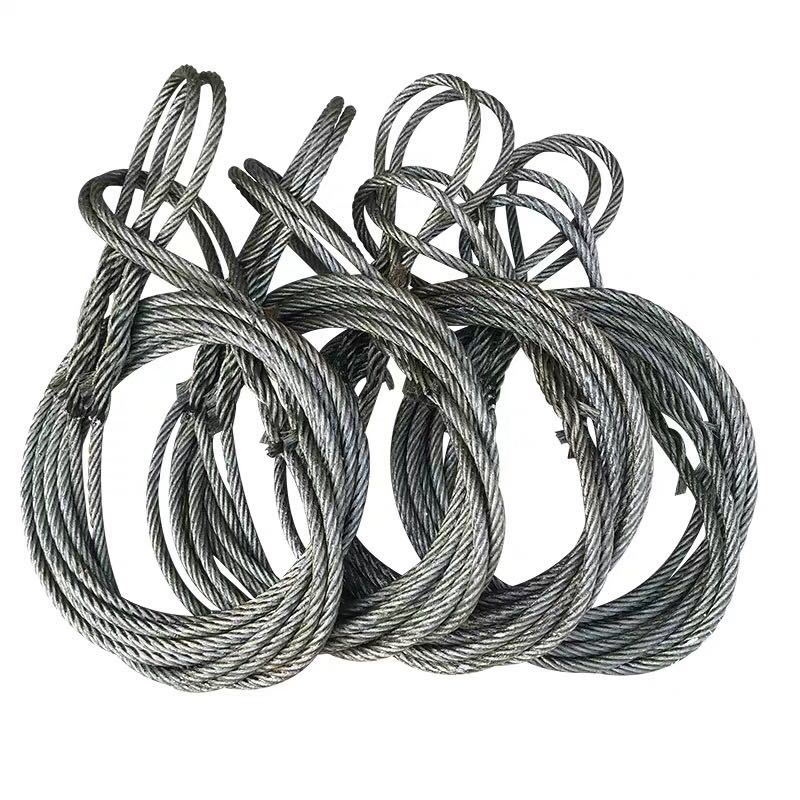
Lifting is never trivial; terminations are critical. For heavy-load, high-frequency operations in ports, offshore engineering, steel structures, wind power, and heavy industry, a sling with reliable terminations, a controlled working load, and strong fatigue resistance sets the safety baseline for site operations. Today, let’s learn about pressed wire rope slings.


Pressed wire rope slings use premium wire rope as the main body, fitted with high-strength metal ferrules. It is formed by high-pressure crimping with a dedicated swaging machine, creating tight interlocking between the ferrule and wire rope to form an integrated permanent termination. It can be assembled with thimbles, shackles, lifting hooks and other fittings to make single-leg, two-leg and four-leg sling assemblies for diverse lifting plans.


⚠️ Safe Operation Guidelines
1. Pre-use: Verify the rated working load. Inspect the swaged ferrule for cracks or slippage, and check the wire rope for broken wires, deformation or damage. Do NOT use if any defect is found.
2. Lifting: No overloading, side pulling or shock loading. The included angle of slings shall not exceed 120°. Use corner protectors on sharp edges. Carry out a trial lift first. Keep personnel clear from under the suspended load.
3. Storage: Clean after use. Store in a dry, ventilated area, protected from sunlight and corrosion. Do not place heavy loads on or trample the slings.
4. Retirement: Immediately remove from service and scrap the sling if the ferrule cracks or slips, or the wire rope suffers broken wires, severe wear or kinking.
Customization of sling length, leg configuration, fitted hooks, shackles and other accessories is available. For detailed technical specifications, material certificates, test reports, or selection assessment for special working conditions such as offshore and heavy-duty industrial applications, please feel free to contact us. GN Ocean Engineering provides one-on-one technical support to keep your lifting operations safe and under control.